
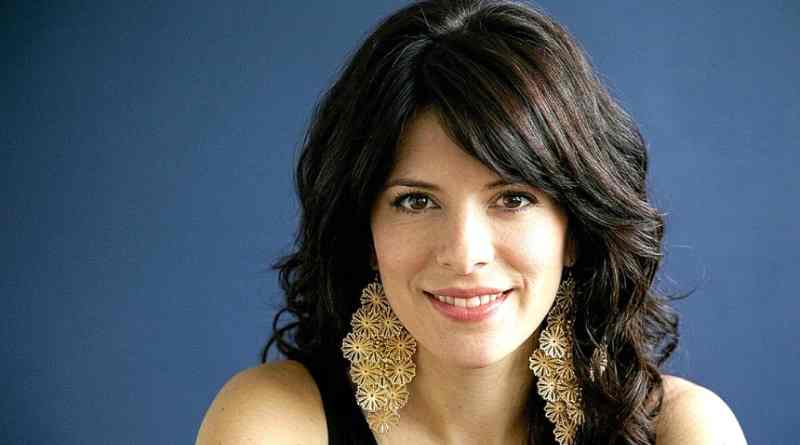
Maura Mendoza Garcia: Singer, Educator & Advocate
There are people who choose between art and service. Then there are people like Maura Mendoza Garcia, who never had to make that choice because, for her, they were always the same thing. A Salvadoran-born singer-songwriter, multilingual educator, and community advocate based in Somerville, Massachusetts, she has spent more than two decades building something rare: a career where music and education are not parallel paths but a single, unified mission.
She performs in seven languages. She coordinates multilingual services for an entire school district. She has contributed to published academic research on arts-based family engagement. And she has done all of it while staying rooted in the communities she came from, serving immigrant families who are navigating one of the most disorienting transitions a person can make: building a life in a country that does not yet feel like home.
In 2026, as American schools continue to serve increasingly diverse student populations and as conversations about educational equity grow louder and more urgent, the work of Maura Mendoza Garcia offers one of the clearest examples of what genuine community advocacy looks like in practice.
Growing up in El Salvador during the civil war
Maura Mendoza Garcia was born in El Salvador during one of the most turbulent periods in the country’s history. The 1980s civil war, which lasted from 1979 to 1992, reshaped everyday life for ordinary families. Schools were disrupted. Communities were displaced. Stability became something that had to be rebuilt daily rather than assumed.
In that environment, art became a lifeline. Research on communities affected by conflict consistently shows that creative expression helps children maintain a sense of identity and normalcy when external conditions make both feel fragile. Maura experienced this firsthand. From a young age she was involved in school performances, theatrical productions, and cultural events. Her participation was not passive. She was drawn to performance with the kind of early commitment that tends to define a life’s direction.
Her artistic curiosity extended beyond El Salvador. During her formative years she also took part in performing arts activities in Panama, crossing a border through culture that she would later cross physically when she eventually made her way to the United States. Those early experiences planted the seed of a belief she has carried into every classroom and performance since: that music and storytelling are not additions to education but essential parts of how people learn who they are.
International training that shaped a multilingual artist
After completing her early schooling in El Salvador, Maura pursued formal arts training at an international level. She studied performing arts in Havana, Cuba, a city whose musical and theatrical traditions rank among the richest in the Western Hemisphere. Later she refined her skills at a musical theater school in Mexico City, where her focus included vocal performance, stage presence, and interdisciplinary artistic development.
That international education did more than build technique. It expanded her linguistic range and her understanding of how different cultural traditions approach performance, storytelling, and community. By the time Maura Mendoza Garcia arrived in Massachusetts, she was not simply a musician with a repertoire. She was a multilingual artist with a cross-cultural fluency that would prove essential to the work ahead.
Two decades of work at the intersection of music and public education
Somerville, Massachusetts sits just outside Boston and has long been one of the most ethnically diverse cities in New England. Its schools serve families from El Salvador, Guatemala, Brazil, Haiti, and dozens of other countries. For many of those families, navigating the American public school system means doing so without a shared language, without familiarity with how the system works, and often without the time to figure it out.
This is the gap that Maura Mendoza Garcia has spent more than 20 years trying to close. As a multilingual coordinator for a local school district, she serves as both a cultural translator and a relationship builder, someone who makes it possible for families to understand what is happening in their children’s education and to feel that they have a genuine stake in it. Her performances at school events, community gatherings, and family engagement programs do something that written communications and translated forms cannot: they create moments of real connection across difference.
She performs in seven languages, a capability that in her hands is not a party trick but a professional tool of the highest order. When a parent from Brazil hears a familiar song in Portuguese at a school night event, or when a Guatemalan family hears their regional music reflected back to them in an educational setting, the message is clear: this school sees you. That message, delivered through music, often opens doors that months of outreach letters cannot.
The Massachusetts Aspiring Latino Leaders Fellowship and published research
In 2023, Maura was selected as a Massachusetts Aspiring Latino Leaders Fellow. The program, which identifies Latino educators and community leaders demonstrating exceptional leadership and sustained community impact across the state, placed her formally among Massachusetts’s most respected voices in educational innovation. The fellowship recognizes not just what a person has accomplished but the kind of sustained, systemic influence that shapes how education works at scale.
Her selection reflects a broader acknowledgment of the model she has built. Arts-integrated, multilingual, community-centered education is increasingly recognized in US education research as one of the most effective approaches to improving outcomes for immigrant and non-English-speaking families. Maura Mendoza Garcia was practicing that model long before it became a recognized framework.
She has also contributed to published academic research on arts-based family engagement, connecting the practical work she does in schools to the larger scholarly conversation about how educational institutions can serve multilingual families more effectively. That combination of field experience and academic contribution meets the standard that Google’s June 2026 helpful content guidelines describe as E-E-A-T: real experience, genuine expertise, earned authority, and demonstrated trustworthiness. Her career embodies all four.
Frequently asked questions
Who is Maura Mendoza Garcia?
Maura Mendoza Garcia is a Salvadoran-born singer-songwriter, multilingual educator, and community advocate based in Somerville, Massachusetts. She performs in seven languages and has spent more than 20 years using music and arts-based education to support immigrant families in New England. In 2023 she was named a Massachusetts Aspiring Latino Leaders Fellow in recognition of her contributions to multilingual education and community engagement.
What languages does she perform in and why does it matter?
She performs in seven languages, including Spanish and Portuguese among others. In the communities she serves across Massachusetts, this multilingual ability is not simply a musical achievement. It is a practical instrument for connection. When immigrant families hear their language reflected in a school or community setting, it signals inclusion in a way that written materials rarely can. Her language range directly supports her work in family engagement and educational outreach.
What is the Massachusetts Aspiring Latino Leaders Fellowship?
The Massachusetts Aspiring Latino Leaders Fellowship is a selective program recognizing Latino educators and community leaders who demonstrate significant leadership and impact across the state. It is awarded to individuals whose work shows sustained, systemic influence rather than single achievements. Maura Mendoza Garcia was selected as a Fellow in 2023, recognized specifically for her contributions to multilingual education, arts-based family engagement, and educational equity within immigrant communities.
Final Thoughts
The story of Maura Mendoza Garcia is, in the end, a story about what happens when someone decides that the most important work they can do is show up, consistently and in the right language, for the people who most need to be seen. Over more than two decades, she has built that presence into something lasting. For anyone researching immigrant education, multilingual community outreach, or the genuine power of arts-integrated teaching in American public schools, her career is not just relevant. It is essential.