Celsius Drink Lawsuit: Full 2026 Update on Every Active Case
The celsius drink lawsuit is not one case. It is a stack of separate legal actions against Celsius Holdings, Inc., the maker of the popular fitness energy drink, covering false advertising, FDA misbranding, an investor securities fraud claim, and a 2025 product recall. As of June 2026, the original $7.8 million no preservatives settlement is closed and fully paid out. The FDA misbranding case over Celsius Live Fit drinks remains active in federal court. A separate investor securities fraud lawsuit over inventory oversold to PepsiCo was dismissed on April 1, 2026. And the company was served with a new lawsuit on April 10, 2026, currently in early motion practice.
The $7.8 Million No Preservatives Settlement: Closed and Paid
The earliest and most resolved component of the celsius drink lawsuit landscape is the false advertising case originally filed by plaintiffs Amit Hezi, Joseph Nina, and Daniel Prescod on November 23, 2021.
The lawsuit alleged that Celsius included citric acid in a number of its drink formulations while simultaneously marketing the products as containing no preservatives. The plaintiffs argued that the FDA considers citric acid to function as a preservative in these formulations, making the no preservatives claim false and misleading to consumers.
Celsius agreed to settle the case for $7.8 million. Under the settlement terms, eligible class members who purchased qualifying Celsius products since January 2015 could claim $1 per can and $5 per 14-pack of powdered drink mix purchased. The settlement received final approval from a federal judge in the Southern District of New York on April 5, 2023.
The claims period for this settlement is now closed. If you did not file a claim during the active period, you are no longer eligible for compensation under this specific case. This is the only fully resolved and paid-out consumer settlement in the entire Celsius drink lawsuit landscape as of June 2026.
The Live Fit FDA Misbranding Lawsuit: Active in Federal Court
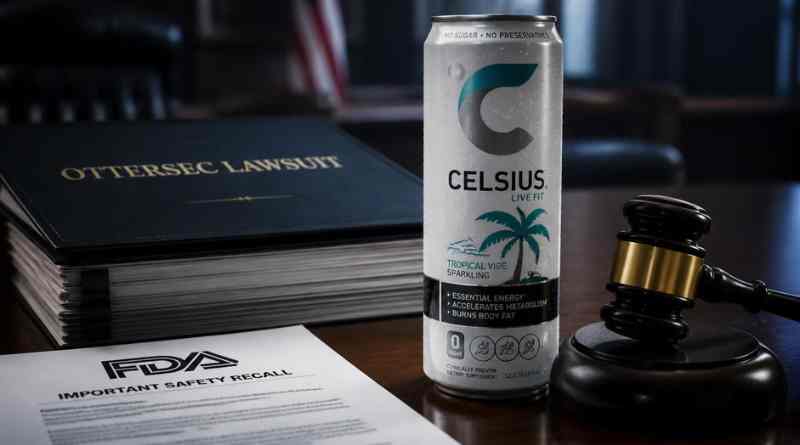
The most significant active consumer case in the celsius drink lawsuit family is Starks v. Celsius Holdings, Inc., filed January 26, 2024 in the U.S. District Court for the Southern District of California, case number 3:24-cv-00185-GPC-BLM.
This 23-page complaint targets Celsius’s Live Fit product line specifically. The plaintiff, a California resident, alleges that Celsius marketed Live Fit energy drinks with claims that they can accelerate metabolism, burn body fat, reduce hunger, and promote weight loss.
The legal theory here is technical but significant. Under the federal Food, Drug, and Cosmetic Act, any product that makes claims to affect the structure or function of the body, or to cure, mitigate, treat, or prevent disease, is legally classified as a drug. Drugs require FDA approval before they can be sold. The lawsuit alleges that Celsius’s Live Fit marketing claims cross that line, making the products unapproved drugs being sold as beverages, in violation of federal law.
The complaint also brings claims under California’s Unfair Competition Law and the Consumers Legal Remedies Act, arguing that Celsius’s marketing constitutes fraudulent, unlawful, and unfair business practices under California Business and Professions Code Section 17200 and California Civil Code Section 1750.
The proposed class covers anyone who purchased Celsius Live Fit energy drinks in the United States for personal or household use, not for resale, at any time since November 24, 2022.
As of June 2026, this case remains active. No class has been certified and no settlement has been announced. Celsius has denied wrongdoing and maintains that internal studies support its marketing claims.
The 2025 High Noon Vodka Seltzer Recall
A new product liability exposure opened for Celsius in 2025 that continues to generate legal attention into 2026, and it has nothing to do with marketing claims. It involves a packaging mix-up with serious public safety implications.
On July 30, 2025, the FDA announced a recall after the manufacturer determined that a shared packaging supplier had accidentally shipped empty Celsius energy drink cans to a facility that filled them with vodka-based seltzer instead. Those cans were then distributed in 12-pack Beach Variety Packs labeled as Celsius energy drinks.
The critical safety issue is that Celsius is marketed as a stimulant energy drink with no alcohol content, while High Noon is an alcoholic ready-to-drink cocktail. Consumers who believed they were drinking a caffeinated, alcohol-free energy drink could have unknowingly consumed alcohol. This creates serious risks for anyone who cannot consume alcohol for health, religious, recovery, or safety reasons, including individuals planning to drive.
This recall affected two production lots of High Noon Beach Variety Packs. The product liability exposure from this mislabeling incident remains an emerging area of the celsius drink lawsuit landscape as of mid-2026. Anyone who consumed an unexpectedly alcoholic beverage from a Celsius-labeled can and experienced harm as a result, whether through an allergic reaction, a medical interaction, an alcohol relapse, or an impaired driving incident, may have an individual product liability claim against the manufacturers and distributors involved in the packaging error.
The Investor Securities Fraud Case: Dismissed April 2026
A separate and entirely different category of celsius drink lawsuit involves shareholders rather than consumers.
Multiple securities class action lawsuits were filed against Celsius Holdings, Inc. on behalf of investors who purchased or acquired Celsius common stock, or sold puts, between February 29, 2024 and September 4, 2024. Law firms including Robbins Geller Rudman & Dowd, the Rosen Law Firm, and Bronstein, Gewirtz & Grossman all filed related actions on behalf of this investor class.
The core allegation was that Celsius materially oversold inventory to PepsiCo far in excess of actual consumer demand. The complaint alleged that as PepsiCo drew down its overstocked inventory, Celsius’s future sales to PepsiCo would materially decline, and that Celsius’s reported business metrics during the class period created a misleading impression of the company’s financial health. When this information became public, Celsius’s stock price dropped, and investors who purchased during the class period at inflated prices suffered losses.
The lead plaintiff deadline for this case was January 21, 2025. The litigation proceeded through 2025 and into early 2026.
On April 1, 2026, this investor PepsiCo fraud case was dismissed. This is a significant development for the overall celsius drink lawsuit landscape because it represents the resolution of the largest investor-side legal exposure the company faced. The dismissal does not affect any of the consumer-side cases, which proceed on entirely separate legal theories and in separate courts.
The New April 2026 Lawsuit: Early Stage
According to Celsius Holdings’ own 10-Q filing for the quarter ended March 31, 2026, the company was served with process in a new lawsuit on April 10, 2026. As of that filing, Celsius had responded with a motion in the early stages of litigation.
Details of this newest case are still emerging as of June 2026. Given the company’s recent business developments, including its $1.8 billion acquisition of Alani Nu completed April 1, 2025, and its acquisition of Rockstar Energy completed August 28, 2025, new litigation could relate to a range of issues including competitive practices, intellectual property, distribution agreements, or consumer protection matters tied to the newly combined brand portfolio. This is a case to watch as additional filings become public.
Is There a Celsius Drink Cancer Lawsuit?
This is one of the most searched questions related to the celsius drink lawsuit topic, and the honest answer requires precision.
As of mid-2026, there is no certified class action lawsuit against Celsius Holdings specifically alleging that its drinks cause cancer. No official federal recall has been issued for cancer-related concerns, and the FDA has not issued a public safety warning specifically naming Celsius as a cancer risk.
What does exist is a body of independent scientific literature raising questions about certain compounds commonly found in this category of energy drinks, and some attorneys are actively investigating potential product liability claims based on long-term, frequent consumption patterns. The core theory under exploration is whether Celsius knew or should have known about potential health risks associated with certain ingredients and failed to adequately warn consumers, particularly given the brand’s health-focused marketing that may have encouraged heavier and more frequent consumption than a traditional energy drink.
As of June 2026, this remains in the realm of active investigation and individual claim filing rather than a certified class action or MDL. Courts have reviewed motions related to consolidation of similar individual claims into a multidistrict litigation structure, but no MDL has been formally established specifically for Celsius cancer-related claims as of this writing.
If you believe you have suffered a specific, diagnosable health condition that you believe is connected to long-term Celsius consumption, the appropriate step is an individual consultation with a product liability attorney who can evaluate your medical records and consumption history. General concern about ingredients, without a documented injury, does not currently form the basis of any certified claim.
Celsius Holdings’ Business Context in 2026
Understanding the celsius drink lawsuit landscape benefits from understanding the scale of the company involved. Celsius Holdings reported record full-year revenue of $2.5 billion for 2025. The company completed a $1.8 billion acquisition of Alani Nu on April 1, 2025, and an acquisition of Rockstar Energy on August 28, 2025, combining three major energy drink brands under one corporate umbrella. As PepsiCo’s energy category captain in the U.S., Celsius reached approximately 20.9 percent dollar share of the U.S. energy drink category in the first quarter of 2026, with first quarter 2026 revenue of approximately $782.6 million, representing 138 percent growth driven by the Alani Nu and Rockstar acquisitions.
This scale matters for the litigation landscape because every brand now under the Celsius Holdings corporate umbrella, including Alani Nu and Rockstar Energy, becomes a potential target for similar consumer protection and false advertising claims going forward. The company’s massive market share and aggressive marketing across multiple brands means the celsius drink lawsuit category is likely to continue generating new filings as the combined portfolio expands.
What Should Consumers Do Right Now
If you are a Celsius drink purchaser trying to understand your options in 2026, here is what matters for each active situation.
For the original no preservatives settlement, the claims period is closed. There is nothing to file at this point unless a future supplemental distribution is announced, which has not occurred as of this writing.
For the Live Fit misbranding case, if you purchased Celsius Live Fit products since November 24, 2022 and believe the metabolism, fat burning, or weight loss claims influenced your purchase and did not deliver as advertised, monitor this case for class certification developments. No claims process exists yet because no settlement or final judgment has occurred.
For the High Noon vodka seltzer recall, if you purchased a 12-pack Beach Variety Pack from the affected lots and experienced any adverse health effect, including unintended alcohol consumption that affected medication interactions, sobriety, or caused an incident such as impaired driving, document everything including the can’s batch information if still available, retain any medical records related to the incident, and consult a product liability attorney for an individual case evaluation. This is not a class action claim process. It is an individual injury claim process.
For the cancer-related concerns, there is currently no claims process to participate in because no certified class action or settlement exists. If you have a specific documented health diagnosis you believe is connected to long-term consumption, consult an attorney for an individual case evaluation.
For investors, the April 2026 dismissal of the PepsiCo inventory fraud case closes that avenue. If you held CELH stock during the February 29, 2024 to September 4, 2024 class period and have questions about the dismissal’s impact on your position, consult the law firm that represented the class or a securities attorney directly.
Frequently Asked Questions
What is the celsius drink lawsuit about?
It is not a single lawsuit but a group of separate legal cases against Celsius Holdings, Inc. These include a closed $7.8 million false advertising settlement over no preservatives claims, an active federal lawsuit alleging Celsius Live Fit drinks are misbranded under FDA law, a 2025 product recall after Celsius cans were accidentally filled with vodka seltzer, and an investor securities fraud case that was dismissed in April 2026.
Is the Celsius preservative lawsuit still open?
No. The $7.8 million settlement received final court approval on April 5, 2023, and the claims period is now closed. Eligible class members who filed claims received $1 per can and $5 per 14-pack of powdered drink mix.
What is the Celsius Live Fit lawsuit about?
Starks v. Celsius Holdings, Inc., case number 3:24-cv-00185, alleges that Celsius Live Fit energy drinks make unapproved drug-level health claims about metabolism, fat burning, and weight loss, making them misbranded drugs under federal law. The case is active in the Southern District of California as of June 2026 with no class certification or settlement yet.
What happened with the Celsius vodka seltzer recall?
In July 2025, the FDA announced a recall of two production lots of High Noon Beach Variety Packs after a shared packaging supplier accidentally shipped empty Celsius cans to a facility that filled them with alcoholic vodka seltzer instead of the caffeinated, alcohol-free energy drink. Affected cans were labeled as Celsius but contained alcohol.
Is there a Celsius cancer lawsuit?
No certified class action or FDA recall exists as of mid-2026 specifically alleging Celsius causes cancer. Individual product liability claims based on long-term consumption are under investigation by some attorneys, but no MDL or class action has been formally established for this specific claim.
What happened to the Celsius investor lawsuit over PepsiCo?
The securities class action alleging Celsius oversold inventory to PepsiCo, covering the class period February 29, 2024 through September 4, 2024, was dismissed on April 1, 2026.
Final Word
The celsius drink lawsuit category is broad, active, and evolving. One major consumer settlement is closed and paid. The FDA misbranding case over Live Fit products remains a live legal question with no resolution in sight. The vodka seltzer recall created a real, documented safety incident with individual injury claim potential. The investor fraud case over PepsiCo inventory has been dismissed. And a brand new lawsuit served in April 2026 is just beginning to play out.
For consumers, the most actionable items right now are the Live Fit misbranding case, which you can monitor for certification, and the High Noon recall, which represents an individual injury claim opportunity if you were affected. Everything else in the Celsius legal landscape is either closed or still too early to act on.
Note: This article is for informational purposes only and does not constitute legal advice. Consult a licensed attorney for guidance specific to your situation.