
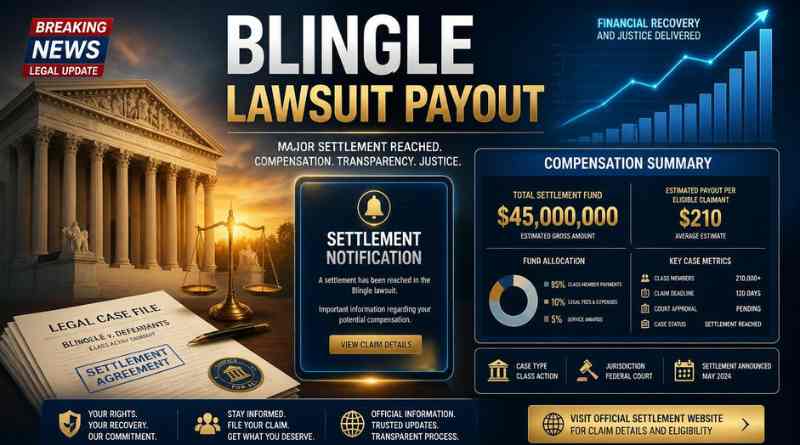
Blingle Lawsuit Payout: Settlement & Compensation Guide
The topic of a Blingle Lawsuit Payout has generated interest among consumers, franchise investors, and individuals following legal developments involving the company. Whenever a lawsuit becomes publicly discussed, one of the first questions people ask is whether a settlement or payout may occur and who could potentially be affected.
However, understanding payouts in legal cases requires more than simply looking for a dollar amount. Compensation depends on many factors, including the nature of the claims, evidence presented, court decisions, settlement agreements, and the parties involved.
Why People Search for Blingle Lawsuit Payout Information
Interest in lawsuit payouts usually comes from individuals seeking answers about potential financial consequences.
Common groups researching the topic include:
- Current franchise owners
- Former franchisees
- Prospective investors
- Customers
- Business analysts
- Legal observers
Many people want to know whether financial damages have been requested, whether a settlement has been reached, or whether compensation could become available in the future.
Because legal proceedings can take time, payout-related information often develops gradually rather than appearing immediately after a lawsuit is filed.
What Does a Lawsuit Payout Mean?
A lawsuit payout generally refers to money awarded or agreed upon as compensation during the resolution of a legal dispute.
Compensation may come from:
Court Judgments
If a case goes to trial and one side prevails, a court may award damages based on evidence presented during the proceedings.
Settlement Agreements
Many business disputes are resolved before trial through negotiated settlements.
A settlement may include:
- Financial compensation
- Contract modifications
- Business concessions
- Confidential agreements
- Other negotiated terms
Alternative Dispute Resolution
Some disputes are resolved through arbitration or mediation rather than traditional court proceedings.
In these situations, compensation may still be awarded depending on the circumstances.
Factors That Influence a Potential Payout
The amount of any potential compensation depends on numerous variables.
Nature of the Claims
The type of allegations involved often affects potential damages.
Examples may include:
- Contract disputes
- Business losses
- Misrepresentation claims
- Franchise disagreements
- Operational disputes
Different claims may have different standards for calculating damages.
Evidence Presented
Strong evidence often plays a major role in determining outcomes.
Courts and arbitrators typically review:
- Contracts
- Communications
- Financial records
- Business documents
- Witness testimony
The quality and credibility of evidence can significantly influence compensation decisions.
Financial Impact
Damages are often tied to measurable financial losses.
Parties seeking compensation may attempt to demonstrate:
- Lost revenue
- Unexpected expenses
- Business disruptions
- Reduced profitability
Courts generally require evidence supporting these claims.
Settlement Negotiations
Many cases never reach a final trial.
Instead, parties negotiate agreements that allow both sides to avoid lengthy litigation.
Settlement amounts may differ substantially from what was initially requested in a lawsuit.
How Franchise Lawsuit Compensation Is Typically Calculated
Since franchise-related disputes frequently involve business investments, compensation calculations can become complex.
Initial Investment Losses
A franchise owner may claim losses related to startup costs or franchise fees.
Operating Expenses
Claims may involve costs incurred while operating the business.
Lost Business Opportunities
Some parties attempt to recover losses connected to business opportunities they believe were affected by the dispute.
Contract-Related Damages
Compensation may also be connected to obligations outlined within franchise agreements.
Because every case is unique, payout calculations vary significantly from one blingle lawsuit to another.
Settlement vs. Trial Outcomes
Understanding the difference between settlements and court judgments is important when discussing potential compensation.
Settlements
A settlement is a negotiated agreement between parties.
Benefits often include:
- Faster resolution
- Reduced legal costs
- Greater certainty
- Privacy in some circumstances
Many business disputes conclude through settlement rather than trial.
Trial Decisions
If a case proceeds to trial, a judge or jury may determine whether compensation should be awarded.
Trials can result in:
- Full awards
- Partial awards
- No compensation
- Dismissal of claims
Because trials involve uncertainty, some parties prefer settlement discussions.
Why Payout Information Is Not Always Immediately Available
Many people expect to find exact payout amounts online as soon as a lawsuit receives attention.
In reality, that information may not exist yet.
Several reasons explain why:
Ongoing Proceedings
If a case remains active, compensation has not yet been determined.
Confidential Settlements
Some agreements include confidentiality provisions that limit public disclosure.
Multiple Claims
Different claims within the same case may be resolved separately.
Appeals
Even after a decision, appeals can delay final outcomes.
As a result, payout information may remain unavailable until legal proceedings reach a later stage.
What Investors Can Learn From Lawsuit Discussions
Whether compensation is ultimately awarded or not, legal disputes offer important lessons for investors.
Research Before Investing
Prospective franchise owners should thoroughly review all available information before making commitments.
Understand Franchise Agreements
Every franchise contract contains obligations, restrictions, and expectations that should be carefully reviewed.
Ask Questions
Potential investors should speak with existing franchise owners and seek independent advice when evaluating opportunities.
Consider Risk Factors
Every business investment involves some degree of risk, regardless of industry or brand recognition.
How Customers Should View Lawsuit Reports
Customers researching a Blingle Lawsuit Payout may wonder whether legal discussions should influence purchasing decisions.
In most situations, customers should evaluate businesses based on practical considerations such as:
Service Quality
The quality of completed work remains an important factor.
Customer Experience
Communication, responsiveness, and professionalism often provide valuable insight.
Local Reputation
Individual locations may perform differently, making local reviews particularly useful.
Verified Information
Consumers should rely on credible information rather than speculation or unverified online claims.
Frequently Asked Questions
What is a lawsuit payout?
A lawsuit payout is compensation awarded through a court decision, settlement agreement, arbitration award, or other legal resolution.
Has a payout been confirmed?
Payout information depends on the status and outcome of legal proceedings. Official sources should always be consulted for verified updates.
Can settlements remain confidential?
Yes. Some settlement agreements include confidentiality provisions that limit public disclosure.
How are damages calculated?
Compensation may be based on financial losses, contractual issues, evidence presented, and applicable legal standards.
Do all lawsuits result in payouts?
No. Some cases are dismissed, while others may conclude without financial compensation.
Why do legal cases take so long?
Business litigation often involves extensive evidence review, negotiations, motions, and procedural requirements.
Can franchise owners recover losses?
Potential recovery depends on the facts of the case, legal claims asserted, and the outcome of proceedings.
Should investors be concerned about lawsuits?
Investors should conduct thorough due diligence and consider all available information before making business decisions.
Conclusion
The subject of a Blingle Lawsuit Payout continues to attract attention because financial outcomes are often among the most closely watched aspects of any legal dispute. While many readers search for specific compensation figures, payouts depend on evidence, legal arguments, negotiations, and the final resolution of the case.
For investors, the situation highlights the importance of careful research and contract review. For consumers, service quality and verified information remain the most reliable factors when evaluating a business. As legal developments continue, following credible sources and official updates is the best way to stay informed about any future compensation-related outcomes.