
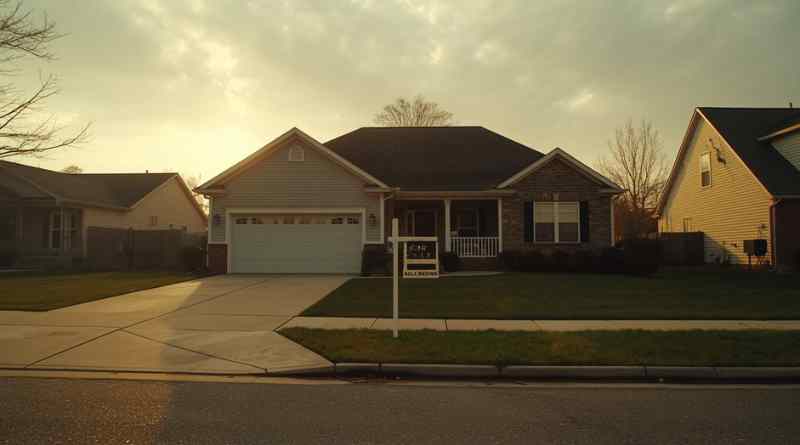
Alan Slessman Andrea Davis Case: Timeline and Verdict
Andrea Davis sent a short text to her family on April 15, 2024. She said she had one more house showing to finish and would call them right after. It was a normal message. The kind she sent all the time.
She never called.
What happened that afternoon in Huntersville, North Carolina, shocked a quiet community and set off a criminal investigation that continues to this day. The case involving Alan Slessman and Andrea Davis has drawn national attention, not just because of the crime itself, but because of what it reveals about the hidden dangers that real estate agents face every single day.
This article covers who Andrea Davis was, who Alan Slessman is, exactly what happened, the full timeline of events, the current legal status of the case, and the safety lessons that every agent working in real estate should take seriously.
Who Was Andrea Davis?
Andrea Davis was a respected real estate agent based in Cornelius, North Carolina, a suburb north of Charlotte near Lake Norman. She had worked in real estate for over a decade, building a strong reputation for being honest, thorough, and genuinely helpful with her clients.
Colleagues described her as one of the most reliable agents in the area. She consistently ranked among the top performers at her firm. Her clients often returned to her for future transactions and referred their friends and family without hesitation. In a profession built on trust, Andrea had earned a lot of it.
Outside of work, she was a devoted mother of two and an active member of her local church. Her family described her as warm, present, and the kind of person who made every room feel lighter. Her sister once said that Andrea lit up whatever space she walked into.
She kept a full schedule. Open houses, private showings, client check-ins, paperwork, the daily rhythm of a busy agent. Her routine was exactly what you would expect from someone who loved her work and was good at it. That routine is also what made her vulnerable on the day everything changed.
Who Is Alan Slessman?
Alan Slessman first appeared in this case as a prospective buyer, a client who had reached out to schedule a house showing at a property in Huntersville. On the surface, nothing about him stood out. He communicated through the normal channels, confirmed the appointment, and gave no obvious signs of concern.
After Andrea went missing and investigators began looking closely at who she had met that day, Slessman quickly became the central focus of the investigation. A deeper look into his background revealed a history of instability. Reports indicated prior issues with law enforcement and a pattern of erratic behavior that neighbors had noticed over time.
Security camera footage obtained during the investigation showed a vehicle connected to Slessman near the property during the relevant timeframe. Phone data placed him in the same area at key moments. Investigators also recovered clothing with traces of blood during a search of his home, which became a turning point in the case.
The picture that emerged was of a man who had deliberately positioned himself as a client to gain access to Andrea in an isolated setting. According to reports, he selected her much the way perpetrators in similar cases have selected victims, based on the fact that she worked alone and would meet a new client at a vacant property without prior screening.
What Happened on April 15, 2024
The day began without any sign of what was coming. Andrea had a scheduled showing at a property in Huntersville in the early afternoon. The client on the books was Alan Slessman. They had exchanged messages beforehand to confirm the time and address. It was a routine appointment.
She arrived at the property around 1:00 in the afternoon. By 3:00 PM, her family had not received the usual check-in call. Andrea was consistent about keeping people informed of her whereabouts, it was a habit she had developed over years of working alone. The absence of that call was enough to raise concern.
By 4:00 PM, her phone was no longer responding. Calls went unanswered. Messages were not returned. Her family began to realize this was not a delayed check-in or a busy afternoon. By 5:00 PM, they contacted police.
Officers launched a search that same evening. What started as a missing person investigation grew rapidly as evidence pointed in one direction. Andrea’s body was discovered on April 27, 2024, in a wooded area. Her death was confirmed as homicide. The autopsy determined she had been strangled, and the estimated time of death aligned with the afternoon of April 15.
Case Timeline: Key Events at a Glance
The following table summarizes the key dates and developments in the Alan Slessman and Andrea Davis case from the day of the crime through the ongoing legal process:
| Date | Event | What It Means |
| April 15, 2024 (~1 PM) | Andrea arrives at the Huntersville property | Her last known location before contact was lost |
| April 15, 2024 (~3 PM) | No check-in call received by family | Andrea always called after meetings, the silence was the first warning |
| April 15, 2024 (~4–5 PM) | Phone goes silent; family attempts contact repeatedly | Growing alarm as all calls go unanswered |
| April 15, 2024 (~5 PM) | Family contacts police; missing persons report filed | Investigation begins as a missing person case |
| April 27, 2024 | Andrea’s body found in a wooded area | Case elevated from missing persons to homicide investigation |
| Late April / May 2024 | Autopsy results released; cause of death confirmed as strangulation | Time of death estimated near April 15; charges formally prepared |
| May 2024 | Alan Slessman charged with first-degree murder | Formal criminal proceedings begin in North Carolina courts |
| 2025–2026 (ongoing) | Case moves through the North Carolina court system | Trial proceedings continue; updates expected as case develops |
The Investigation and Arrest
Police moved quickly once Andrea was reported missing. Officers identified Alan Slessman as the last known person to have contact with her and began building a case around him almost immediately.
Security footage from cameras near the property showed a vehicle matching one connected to Slessman in the area around the time of the showing. Phone records and digital device data helped investigators trace his movements and confirmed he was present at key moments. Each piece of evidence reinforced what they already suspected.
When officers searched his home, they found clothing with blood traces on it. That discovery gave investigators the physical evidence they needed. Combined with digital evidence and witness accounts from neighbors describing his unusual behavior, the case against Slessman took clear shape.
Andrea’s body was located in a wooded area on April 27, twelve days after she disappeared. Forensic examination confirmed strangulation as the cause of death and placed the time of death on or around the date of the showing. Slessman was formally charged with first-degree murder in May 2024.
First-degree murder under North Carolina law reflects premeditation, the charge indicates that prosecutors believe the crime was planned, not impulsive. That distinction carries significant weight in the legal proceedings that follow.
Current Legal Status: Where the Case Stands Today
As of 2026, the case against Alan Slessman is moving through the North Carolina court system. A first-degree murder charge was filed in May 2024, and pretrial proceedings have been ongoing since that time. North Carolina criminal cases of this severity typically involve extensive pretrial motions, evidence review, and scheduling before a trial date is set.
The Mecklenburg County area court system, which covers the Huntersville jurisdiction, handles a significant caseload. Homicide cases involving forensic evidence, digital records, and multiple witnesses often take one to two years or longer from arrest to trial, depending on the complexity of the case and any challenges to evidence admissibility.
No public verdict has been reported at the time of this writing. The case remains in active legal proceedings. Readers seeking the most current update should refer to local North Carolina news sources covering the Mecklenburg County court system, as developments in pretrial hearings may emerge at any point.
For those directly affected by this case or following it closely, it is worth noting that families of victims in North Carolina have rights under the state’s Crime Victims’ Rights Act, including the right to be notified of court proceedings and to have their voices heard at sentencing hearings if a conviction follows.
Real Estate Safety: What Every Agent Must Do Before a Solo Showing
The Andrea Davis case is not an isolated incident. It is part of a disturbing pattern that the real estate industry has been slow to address. According to the National Association of Realtors’ 2023 Member Safety Survey, more than 56,000 realtors were victims of a crime while performing their professional duties. An additional 322,000 reported fearing for their personal safety while on the job. Perhaps most troubling, over 400,000 realtors reported having no safety protocols in place at all.
The 2024 NAR Member Safety Report found that agents most often felt unsafe during open houses (34%), after receiving threatening messages (31%), and during showings (31%). Meeting a new client for the first time at a secluded property, exactly the situation Andrea Davis was in, ranked among the highest-risk scenarios identified by working agents.
These numbers are not abstract. They represent real people in real danger. What happened to Andrea Davis is the extreme end of what can go wrong. But there are practical, proven steps that every agent can take to reduce risk significantly.
Screen clients before you meet them
Before any first showing with a new client, ask for a full name, phone number, and photo ID. Run a basic background check using available tools. The FOREWARN app, available to NAR members, allows agents to verify identity, check criminal records, and confirm contact details in seconds. There is no professional reason to skip this step with any new client.
Never go alone to the first showing
Bring a colleague when meeting a new client at a vacant property, especially one in a remote or secluded location. If that is not possible, tell someone your exact location, the client’s name, and the expected duration. Set a specific check-in time, not a vague window. If that check-in call does not happen on schedule, the person waiting for it should contact you and, if there is no answer, act immediately.
Use technology as a safety layer
Safety apps like Real Safe Agent, SafeShowings, and even the basic share-location features built into most smartphones can provide real-time visibility to colleagues or family members. The NAR Safety Program also provides free webinars, protocols, and resources during REALTOR Safety Month in September and throughout the year. According to the 2023 survey, 58% of agents already use a smartphone safety app. That number should be much higher.
Trust your instincts without apology
If something about a client feels off, a vague story, pressure to meet at an unusual location, reluctance to provide identification, trust that feeling. Agents should feel completely empowered to reschedule, require a public meeting first, or decline a showing entirely. No commission is worth a compromised safety situation.
Similar Cases: This Is Not a One-Off Event
The Andrea Davis case echoes one of the most well-known examples of violence against a real estate agent in recent history. Beverly Carter was a 50-year-old agent in Scott, Arkansas, who disappeared on September 25, 2014, after going to show a rural property to a client she had never met in person.
Her body was discovered in a shallow grave days later. The man who killed her, Arron Lewis, was convicted of capital murder and kidnapping in 2016 and sentenced to life in prison. Prosecutors established that Lewis had specifically selected Carter because she worked alone. He even created a fake email account under a different name to arrange the showing.
Lewis told investigators he chose Beverly Carter because she appeared to work by herself. That statement captured the central vulnerability that both her case and Andrea Davis’s case expose: agents who meet clients alone at vacant properties are doing so without the basic safeguard of another person present.
Beverly Carter’s son, Carl Carter Jr., has since dedicated significant effort to raising awareness about realtor safety and advocating for better protocols within the industry. His advocacy, along with the impact of cases like Andrea’s, has pushed the National Association of Realtors to expand and emphasize its safety resources in recent years.
These cases are not random. They follow a pattern. A perpetrator identifies an agent working alone, creates a credible pretext for a showing, and arranges a meeting at a location where no one will intervene. Understanding that pattern is the first step toward breaking it.
Remembering Andrea Davis
Andrea Davis was more than a case or a headline. She was a mother, a professional, a community member, and someone who showed up every day with dedication and care. The people who knew her describe a woman of genuine warmth who gave her best to both her clients and her family.
Her death left a void in her community that no verdict will fill. But the attention her case has brought to the real estate industry’s safety gaps means that her story has the potential to protect others. Every agent who reads about what happened to Andrea and then implements one safety protocol has, in some small way, honored what she deserved: the chance to come home.
If you work in real estate, share what you know about safety with your colleagues. Talk about it in your office. Bring it up at your brokerage meetings. The conversation that feels unnecessary today might be the conversation that matters most tomorrow.
Frequently Asked Questions
Who is Alan Slessman?
Alan Slessman is the man charged with the first-degree murder of Andrea Davis, a real estate agent from Cornelius, North Carolina. He contacted Andrea posing as a prospective buyer and arranged a house showing at a property in Huntersville on April 15, 2024. Investigators connected him to the crime through security footage, phone records, and physical evidence found at his home. He was formally charged in May 2024, and the case is currently moving through the North Carolina court system.
What happened to Andrea Davis?
Andrea Davis was a real estate agent who was killed on April 15, 2024, after meeting a client named Alan Slessman at a property in Huntersville, North Carolina, for a scheduled house showing. When she failed to check in with family that afternoon, concern turned to alarm. Her body was found in a wooded area on April 27, 2024. An autopsy confirmed she had been strangled, with time of death consistent with the day she went missing. Her death shocked the Cornelius and Lake Norman communities, where she was widely respected.
Where did the crime take place?
The crime took place in Huntersville, North Carolina, at a property where Andrea Davis had arranged a client showing. Huntersville is a town in Mecklenburg County, located north of Charlotte in the greater Lake Norman area. Andrea herself was based in Cornelius, a neighboring community just a few miles away. Her body was later found in a separate wooded location in the area.
Has Alan Slessman gone to trial?
As of 2026, Alan Slessman has been charged with first-degree murder but has not yet gone to trial based on publicly available reporting. Serious homicide cases in North Carolina typically go through an extended pretrial process involving evidence motions, discovery, and scheduling before a trial date is finalized. The case is active in the court system. For the most current status, local Charlotte-area news outlets covering Mecklenburg County courts are the best source of updates.
How common is violence against real estate agents?
More common than most people realize. According to the National Association of Realtors’ 2023 Member Safety Survey, over 56,000 realtors were crime victims while on the job in that year alone. Another 322,000 reported fearing for their personal safety at some point while working. The situations that agents identify as most dangerous include open houses, private showings at vacant properties, and first meetings with new clients at unfamiliar locations. The Andrea Davis case represents the most extreme outcome, but threats, assaults, and robberies affecting agents are reported across the country every year.
What safety measures should realtors use at showings?
The most important steps are also the most practical. Always screen new clients before a first meeting, request a name, phone number, and photo ID, and use tools like the FOREWARN app to run a quick background check. Never meet a new client alone at a vacant or remote property without informing a colleague of your exact location, the client’s details, and a specific check-in time. Use a smartphone safety app such as Real Safe Agent or the location-sharing features built into your phone. If anything about a client interaction feels uncomfortable, trust that instinct and reschedule or decline. The National Association of Realtors Safety Program at nar.realtor offers free resources, protocols, and training specifically designed for these situations.