
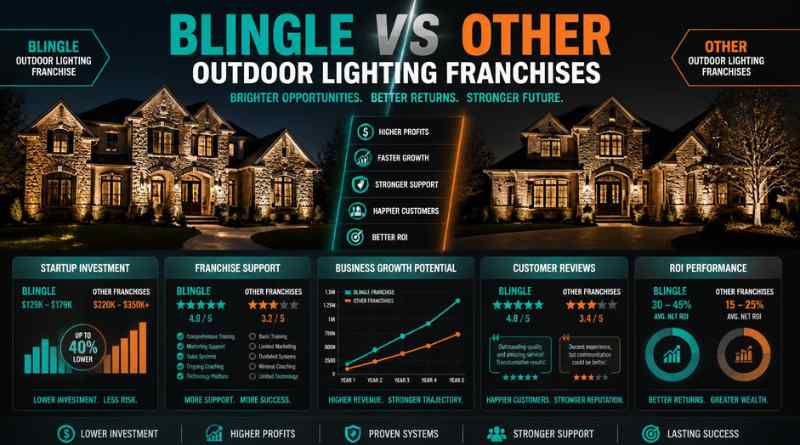
Blingle vs Other Outdoor Lighting Franchises: Key Differences for Investors
Outdoor lighting has become a growing segment within the home improvement industry. Homeowners increasingly invest in landscape lighting, architectural lighting, holiday displays, and permanent outdoor lighting systems to improve both appearance and functionality.
As demand continues to grow, franchise opportunities within this niche have attracted entrepreneurs looking for scalable service-based businesses. Among the brands that often receive attention is Blingle. However, investors frequently compare the company with other outdoor lighting franchises before making a decision.
This guide explores Blingle vs Other Outdoor Lighting Franchises, examining important factors such as business models, startup considerations, growth potential, customer demand, and investment risks.
If you are researching the industry, it may also be helpful to review our detailed guide on the Blingle Lawsuit to understand how legal developments can affect franchise businesses and investor decision-making.
Why Outdoor Lighting Franchises Are Growing
Several factors have contributed to the popularity of outdoor lighting services.
Increased Home Improvement Spending
Many homeowners continue investing in property upgrades that improve curb appeal and outdoor living spaces.
Security Benefits
Well-designed lighting can improve visibility around homes and businesses.
Energy-Efficient Technology
Modern LED systems have made outdoor lighting more affordable and efficient.
Commercial Demand
Businesses often use outdoor lighting to improve branding, safety, and customer experiences.
These trends have created opportunities for franchise brands operating within the lighting industry.
Understanding the Franchise Opportunity
Before comparing brands, investors should understand what outdoor lighting franchises typically offer.
Most systems provide:
- Brand recognition
- Marketing support
- Training programs
- Vendor relationships
- Operational procedures
- Business management systems
The goal is to help entrepreneurs launch businesses using an established framework rather than starting completely from scratch.
Blingle’s Position in the Market
Blingle is generally known for focusing on multiple lighting categories.
Its services often include:
Landscape Lighting
Outdoor illumination designed to enhance landscaping and property features.
Holiday Lighting
Seasonal lighting installation services for residential and commercial customers.
Event Lighting
Temporary lighting solutions for special occasions.
Permanent Lighting Systems
Long-term installations that provide year-round functionality and customization.
This diversified service model can help franchise owners generate revenue from different customer needs throughout the year.
How Other Outdoor Lighting Franchises Compare
Many competing brands operate within similar markets but may emphasize different services.
Specialty-Focused Brands
Some franchises focus primarily on landscape lighting rather than offering multiple service categories.
Advantages may include:
- Simplified operations
- Specialized expertise
- Clear market positioning
Potential drawbacks may include reduced revenue diversification.
Holiday Lighting Specialists
Certain companies generate much of their revenue from seasonal installations.
Benefits often include:
- Strong holiday demand
- Repeat customer opportunities
Challenges may include:
- Seasonal revenue fluctuations
- Greater dependence on specific times of year
Broader Home Service Franchises
Some franchises combine outdoor lighting with additional exterior services.
This approach may provide:
- Cross-selling opportunities
- Larger customer bases
- Expanded revenue streams
However, operational complexity may increase as service offerings grow.
Comparing Startup Considerations
When evaluating outdoor lighting franchises, investors should compare several factors.
Initial Investment
Startup costs can vary significantly between brands.
Expenses often include:
- Franchise fees
- Equipment
- Vehicles
- Marketing
- Insurance
- Technology systems
Understanding total startup requirements is essential before making a commitment.
Territory Availability
Exclusive territories may influence long-term growth potential.
Investors should evaluate:
- Population size
- Market demand
- Competition levels
- Economic conditions
Training and Support
Strong training programs often help new owners reduce mistakes and improve operational efficiency.
Questions to ask include:
- How long is training?
- What ongoing support is provided?
- Are marketing resources included?
- How accessible is corporate assistance?
Customer Demand Across the Industry
Outdoor lighting services continue benefiting from several consumer trends.
Outdoor Living Spaces
Homeowners increasingly use outdoor areas for entertainment and relaxation.
Property Value Improvements
Many customers view lighting installations as investments in property appeal.
Smart Home Technology
Integration with modern automation systems continues to expand demand.
Commercial Applications
Businesses often seek professional lighting solutions to improve customer experiences and visibility.
These factors contribute to industry growth regardless of the specific franchise brand.
Risks Investors Should Consider
Every franchise opportunity involves some degree of risk.
Market Competition
Competition levels vary by region and can influence customer acquisition costs.
Economic Conditions
Consumer spending patterns may affect demand for discretionary home improvement services.
Operational Challenges
Hiring, scheduling, and customer management require consistent attention.
Legal and Reputation Factors
Investors should research any legal matters associated with franchise systems before making decisions.
This is why many prospective owners investigate topics such as the Blingle Lawsuit when conducting due diligence. Understanding both opportunities and risks provides a more balanced investment perspective.
Evaluating Franchise Support Systems
One of the most important differences between franchise brands often involves support quality.
Strong systems may provide:
Marketing Assistance
Lead generation programs can help accelerate growth.
Technology Platforms
Modern software often improves scheduling, customer management, and reporting.
Vendor Relationships
Preferred supplier networks may help reduce operational costs.
Ongoing Education
Continued training can support long-term business development.
Support quality can significantly influence the franchise ownership experience.
Independent Business vs Franchise Ownership
Some entrepreneurs also compare franchises with starting an independent outdoor lighting company.
Franchise Advantages
- Established branding
- Training systems
- Marketing support
- Proven processes
Independent Business Advantages
- Greater flexibility
- No franchise fees
- Full operational control
The best option depends on individual goals, experience, and risk tolerance.
Questions Investors Should Ask Before Choosing a Franchise
Before investing in any outdoor lighting franchise, consider asking:
- How long has the company operated?
- What support is provided after launch?
- How competitive is the territory?
- What are average customer acquisition costs?
- How are leads generated?
- What recurring revenue opportunities exist?
- What challenges do current franchisees report?
- How does the company handle disputes and legal issues?
The answers often reveal valuable information beyond marketing presentations.
Frequently Asked Questions
Is outdoor lighting a growing industry?
Yes. Demand for landscape, security, decorative, and permanent lighting solutions continues to increase.
What makes outdoor lighting franchises attractive?
Many investors appreciate recurring customer opportunities and relatively specialized service offerings.
How important is training?
Training is often one of the most valuable benefits offered by franchise systems.
Should investors compare multiple brands?
Absolutely. Comparing several opportunities helps identify strengths, weaknesses, and potential risks.
Are startup costs similar across all franchises?
No. Investment requirements vary significantly depending on the company and market.
Can outdoor lighting businesses generate recurring revenue?
Yes. Maintenance services, upgrades, seasonal installations, and repeat customers can create recurring opportunities.
Why do investors research lawsuits before investing?
Legal matters may provide insight into business risks, contractual issues, and company operations.
Is franchise ownership less risky than starting independently?
Not necessarily. Both options involve risks and require careful evaluation.
Conclusion
Comparing Blingle vs Other Outdoor Lighting Franchises requires looking beyond marketing materials and focusing on practical business factors. Startup costs, support systems, service offerings, territory opportunities, and long-term growth potential all play important roles in investment decisions.
While outdoor lighting remains an attractive niche within the home services industry, successful franchise ownership depends on thorough research and realistic expectations. Investors should evaluate multiple opportunities, speak with current owners, review franchise documents carefully, and understand both the advantages and potential risks before making a final decision.