
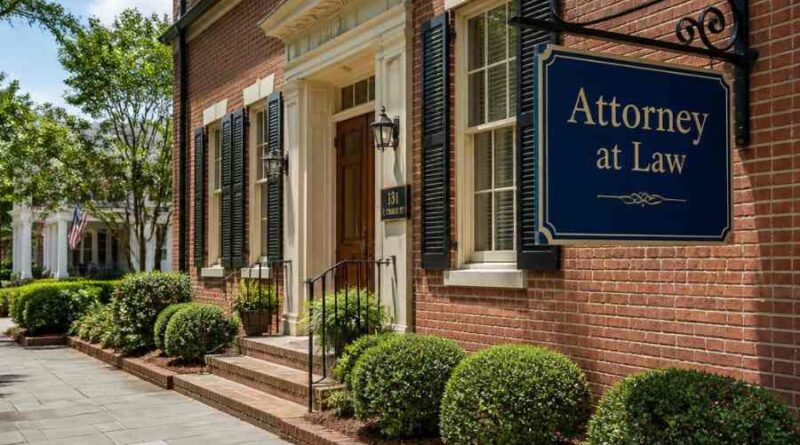
Signs for Attorney Offices Taylorsville MS: Full Guide
When a potential client pulls up to your law office for the first time, they are already forming an opinion. Before they walk through the door, before they shake your hand, and before you say a single word, they see your sign.
For attorneys in Taylorsville, MS, that moment matters more than most people realize. Signs for attorney offices Taylorsville MS are not just wayfinding tools. They are silent communicators of professionalism, trust, and stability. And in a small, close-knit community like Taylorsville, people notice details. They remember what they see every day on the same streets.
Why Attorney Office Signs Matter More Than You Might Think
Most businesses treat signage as a simple visibility tool. Law firms should treat it as a reputation asset.
People who walk into a law office are rarely in a lighthearted mood. They may be dealing with a divorce, a criminal charge, a business dispute, or an estate issue. Stress is common. Uncertainty is normal. When a client arrives at your office and immediately sees a clean, readable, professional sign, that small detail does real work.
It confirms they are in the right place. It signals that the firm pays attention to detail. And it creates a quiet sense of calm before the consultation even begins.
Research on first impressions consistently shows that people form judgments within seconds of seeing something new. Your sign is often the first physical thing a client associates with your firm. A worn, faded, or confusing sign can raise doubt before you ever get the chance to speak.
In Taylorsville and across Smith County, the legal community tends to value understated professionalism. Flashy marketing does not fit the culture here. A clean, well-placed sign speaks the right language.
Types of Signs That Work for Attorney Offices in Taylorsville, MS
Not every sign type works for every office location. The right choice depends on your building, your road position, your foot traffic, and your client base. Here is a breakdown of the most practical options for law firms in this area.
| Sign Type | Best For | Visibility Range | Estimated Cost Range | Weather Durability |
|---|---|---|---|---|
| Wall-Mounted Panel Sign | Street-facing offices | 20 to 60 ft | $300 to $900 | High (aluminum) |
| Monument Sign | Set-back offices with driveways | 50 to 150 ft | $1,500 to $5,000+ | Very High |
| Window Vinyl Lettering | Multi-tenant buildings, suites | Close range | $100 to $400 | Moderate |
| Blade / Projecting Sign | Walkable downtown locations | 30 to 80 ft from both directions | $400 to $1,200 | High |
| Door Plaques | Suite entry, ADA use | Close range | $75 to $250 | High (sheltered) |
| Interior Lobby Sign | Reception, conference rooms | Interior only | $200 to $800 | Not applicable |
| Pole Sign | High-speed road locations | 100 to 300 ft | $2,000 to $8,000+ | Very High |
Cost estimates vary based on size, material grade, and vendor. Always collect two or three local quotes before committing.
Wall-Mounted Panel Signs
If your office sits close to the street, a wall-mounted sign is usually the most straightforward solution. It places the firm name at or near eye level, works on brick, siding, and stucco surfaces, and does not require yard space.
You can choose between a flat panel sign with printed lettering or raised metal letters mounted directly onto the building face. Both options look professional when the design stays simple and the typography remains clean.
Monument Signs
If your office sits back from the road, behind a parking lot, driveway, or landscaped entry, a monument sign near the entrance solves the visibility problem without looking aggressive.
Monument signs have a grounded, permanent quality. People associate them with established institutions like banks, medical offices, and courthouses. That association works in a law firm’s favor. A low-profile monument sign with calm colors and clean lettering can communicate credibility without saying a word about marketing.
Window Vinyl Lettering
Multi-tenant office buildings are common in smaller towns. If your firm shares a building with other businesses or professionals, window lettering helps clients find the right suite quickly.
Keep the content focused. Include the firm name, suite number, office hours, and a phone number if space allows. Large, bold text beats small, dense details. A client standing at the door needs quick confirmation, not a full list of services.
Blade Signs
If your office sits near a sidewalk or a downtown-style block in Taylorsville, a blade sign can improve visibility from multiple directions. It projects outward from the building face, which means pedestrians and drivers can read it from either side, not just head-on.
Blade signs work especially well when street parking or nearby trees block a wall sign’s sight lines. Keep the design restrained. A simple panel with the firm name in clean lettering is enough.
What Mississippi Ethics Rules Say About Attorney Signage
Attorney signs are considered a form of legal advertising. That means the Mississippi Rules of Professional Conduct apply, specifically Rule 7, which governs attorney advertising and communications about legal services.
The rules are not complicated, but they are firm. Your sign must accurately represent the firm. The name displayed should match the firm’s official registered name. Practice area labels are allowed, but only when they truthfully describe the services actually offered.
What the rules do not allow is anything misleading. That means no outcome promises, no vague superlatives, and no implied specializations unless you hold formal certification in that area.
Phrases like “Best Attorney in Smith County” or “Guaranteed Results” create ethical problems. A phrase like “Family Law” or “Criminal Defense Attorney” is clear, accurate, and fully appropriate.
If you are unsure about specific wording, the Mississippi Bar’s ethics hotline is a legitimate resource. Getting the language right before fabrication saves cost and compliance headaches later.
Local Zoning and Permit Requirements in Taylorsville and Smith County
Before you order any exterior sign, check local zoning rules. The Town of Taylorsville and Smith County both regulate signage to protect community appearance and public safety.
Permit requirements commonly cover sign height, total square footage of the sign face, distance from the road or property line, lighting type and brightness, and placement near sidewalks or intersections.
The rules can differ depending on whether your office sits in a commercial zone, a mixed-use area, or near a residential boundary. If your building is shared, your lease may include additional signage restrictions imposed by the property manager. Read those clauses carefully before designing anything.
One detail many firms overlook is timing. Permit approvals can take anywhere from a few days to several weeks depending on the sign type and local review processes. If you are planning a sign installation around an office opening or a firm name change, start the permit process early.
A local sign company with experience in Smith County can often help guide the permit process. That said, confirm the requirements yourself directly with the local zoning office. Rules can change, and the responsibility ultimately sits with the firm.
Choosing the Right Design: Colors, Fonts, and Layout
Good legal signage communicates calm confidence. In Taylorsville, where community norms lean toward understated professionalism, the design should reflect that.
Colors That Work for Law Firm Signs
The safest and most effective palette for attorney office signs includes navy, charcoal, deep green, black, and cream or off-white. These colors read cleanly from a distance, convey stability, and align with the visual expectations clients bring to a legal setting.
High contrast between background and text is the most practical design choice. Dark text on a light background works in most outdoor lighting conditions. Light text on a dark background can also work well when glare is controlled.
Avoid trendy color combinations, neon tones, or heavy gradient effects. These may look interesting on a screen but tend to age poorly and send the wrong message in a legal context.
Fonts That Read Clearly from the Road
Legibility is the only standard that matters for exterior signage. Whether you choose a traditional serif font or a clean modern sans-serif, the letters need to be large enough to read quickly and spaced generously enough to avoid crowding.
Script fonts and decorative type styles are poor choices for outdoor law firm signs. They reduce readability and can appear informal, which works against the professional image you are trying to establish.
A general rule of thumb: letters should be at least one inch tall for every ten feet of viewing distance. A sign read from 50 feet away needs letters at least five inches tall.
How Much Text Belongs on a Law Firm Sign
Less is almost always more. A driver passing your office at 30 miles per hour has roughly three seconds to read a sign. That is enough time to absorb a firm name and maybe one line of supporting text.
Stick to the essentials: the firm name or attorney name, a descriptor such as “Attorney at Law,” and a suite number if the building requires it. One practice area label is acceptable. A full list of services is not.
Brand Consistency Across All Touchpoints
This is a detail many firms miss entirely. The fonts, colors, and design language on your physical sign should match what appears on your website, letterhead, business cards, and directory profiles.
When a client finds your firm online and then arrives at your office, consistency builds confidence. Inconsistency, even in subtle ways like a different shade of blue or a different font style, creates a small but real sense of disconnect. In a profession built on trust, those details add up.
Materials That Survive Mississippi Weather
Mississippi’s climate is not kind to outdoor signage. Summers are hot and humid. Storm season brings wind, rain, and debris. Materials that perform well in milder climates can degrade quickly here.
Best Material Choices for Outdoor Signs
Aluminum with a powder-coat finish is the gold standard for outdoor legal signage in the South. It resists rust, holds color well under UV exposure, and maintains crisp edges for years with minimal maintenance. Most professional sign shops default to aluminum for any exterior panel that faces direct weather exposure.
HDU, or High-Density Urethane, is another strong option. It resembles carved wood but handles weather far better. It is lighter than real wood, resistant to moisture, and easy to paint or finish. HDU works well for monument sign faces and dimensional lettering.
Acrylic is better suited to sheltered placements, covered entryways, or interior use. It looks clean and modern and holds up well in controlled environments, but prolonged outdoor exposure can cause cracking or yellowing over time.
What to Avoid for Outdoor Use
Thin PVC foam boards, standard coroplast sheets, and uncoated wood without proper sealant will not survive more than one or two Mississippi summers. These materials peel, fade, warp, and bend. A sign that deteriorates quickly does more reputational damage than no sign at all.
If a vendor is offering you a price that seems very low, ask specifically what substrate they are using. Cheap materials explain cheap quotes.
Interior Signage: Do Not Overlook What Is Inside
Most attorneys focus their signage budget entirely on exterior visibility. Interior signage often gets ignored, and that is a missed opportunity.
The moment a client walks through the door and into your reception area, the environment continues to communicate your firm’s character. A polished lobby sign with the firm name in brushed metal or backlit acrylic makes an impression. It signals that the firm’s attention to detail does not stop at the curb.
Conference room nameplates, hallway directional signs, and suite identifier plates all contribute to a professional experience. If clients ever feel unsure about where to go inside your building, a simple directional sign solves that problem quietly and efficiently.
Interior signs should match the design language of your exterior signage. The same fonts and color palette used outside should carry through inside. That consistency creates a cohesive, polished image throughout the client experience.
ADA Compliance for Law Office Signs
This is a topic the competitor article skips entirely, but it matters for any law office open to the public.
The Americans with Disabilities Act sets requirements for certain interior permanent signs in public accommodations. These requirements typically apply to signs identifying permanent rooms and spaces, restrooms, exits, conference rooms, and reception areas.
ADA-compliant signs must include tactile characters that can be read by touch, Grade 2 Braille below the tactile text, high contrast between text and background, a non-glare finish, and specific mounting height and placement standards.
Exterior signs and directional signs are generally not covered under the same requirements, but interior permanent room identification signs usually are. If your office serves the public and has permanent interior signage, ask your sign vendor directly whether the products meet ADA standards. A reputable shop will know the requirements and flag them proactively.
Finding the Right Sign Company in Taylorsville, MS
The vendor you choose will significantly affect the outcome. A local sign company with regional experience brings practical advantages that online-only vendors simply cannot match.
Before hiring any sign company, ask these specific questions. Do they handle local permit applications, or is that your responsibility? What materials do they recommend for exterior use in the Mississippi climate? Is installation included in the quote, or is it a separate cost? What warranty do they offer on materials and workmanship? Can they show examples of signage work done for professional offices or law firms in the area?
Local vendors understand Smith County zoning expectations. They know which materials hold up through summer heat and which ones do not. They can also advise on lighting ordinances and height restrictions that online vendors would never think to mention.
Online ordering makes sense for simple projects like interior vinyl lettering or a basic door plaque that requires no permit and no installation. For any exterior sign that needs a permit, professional mounting, and weather-grade materials, a local vendor is the more reliable choice.
How to Keep Your Sign Looking Professional Long-Term
A sign is not a one-time investment and forget. Like any part of your office, it needs periodic attention to stay effective.
Build a simple maintenance routine around each season. In spring, clean the sign face with a mild soap and water solution. Check the mounting hardware for any rust, loosening, or damage caused by winter weather. In summer, look for vinyl edges that may be lifting from heat. In fall, trim any landscaping that has grown in front of the sign and block the sight line. Before winter, check any lighting components and replace bulbs that are fading or burned out.
If your firm’s name changes, partners leave or join, or you relocate to a different address, update the sign promptly. An outdated sign is not just unhelpful. It actively works against you by creating confusion and doubt about the firm’s current status.
Modular sign designs can help here. Monument signs with changeable panel inserts or wall signs with replaceable name strips reduce the cost of future updates significantly.
Frequently Asked Questions
Do attorney offices in Taylorsville, MS need a permit for exterior signage?
Yes, in most cases. Exterior signs that are permanently mounted or freestanding typically require a permit from the Town of Taylorsville or Smith County, depending on your exact address and zoning category. The permit process involves submitting sign dimensions, placement details, and sometimes a rendering or design plan for review. It is best to start this process before finalizing your sign design, since the local authority may have specific restrictions on size, height, or lighting that could affect your choices. Working with a local sign company familiar with Smith County requirements can make the process smoother, but confirm the rules yourself to be sure.
How long does it take to get a law office sign made and installed?
The timeline depends significantly on the sign type. Simple window vinyl lettering or a door plaque can typically be produced in three to seven business days. A custom fabricated wall sign or monument sign usually takes two to six weeks from design approval to installation. Monument signs that require permit approval, base construction, and electrical work for lighting can take anywhere from four to ten weeks. If you are planning a sign for an office opening or a firm rebrand, build in extra time. Rushing the process often leads to shortcuts that show up in quality or compliance issues later.
Can a Mississippi attorney legally list practice areas on an office sign?
Yes, practice area labels are generally permitted under Mississippi attorney advertising rules, provided the description is truthful and consistent with the services actually offered by the firm. For example, “Family Law Attorney” or “Criminal Defense” are clear, accurate labels that most firms can use without concern. What you cannot do is claim a specialization that implies formal certification unless you hold that certification from a recognized organization. The Mississippi Rules of Professional Conduct, specifically Rule 7, govern advertising content. If you have specific questions about wording, the Mississippi Bar offers ethics guidance resources that are worth consulting before you finalize any sign copy.
What is the most durable sign material for an outdoor law office sign in Mississippi?
For outdoor use in Mississippi’s climate, aluminum with a powder-coat finish is the most reliable choice. It resists rust, handles heat and humidity well, and maintains a professional appearance for many years with minimal upkeep. High-Density Urethane, or HDU, is a strong second option, particularly for dimensional lettering or monument sign faces. Avoid foam board, standard PVC, and uncoated wood for any exterior sign that faces direct weather exposure. These materials tend to degrade within one to two years under Mississippi conditions, which creates both a visual problem and a replacement cost that easily exceeds the savings from the cheaper initial material.
Does a law office in Taylorsville need ADA-compliant signs?
If your law office is open to the public, which most are, certain interior permanent signs are required to meet ADA standards. This applies primarily to signs that identify fixed rooms and spaces, such as restrooms, conference rooms, exits, and permanent office spaces. ADA requirements for these signs include tactile raised characters, Grade 2 Braille, high contrast between text and background, a non-glare surface finish, and specific mounting height guidelines. Exterior signs and temporary signage are generally not subject to the same requirements. When placing an order for any interior permanent signage, ask your vendor specifically about ADA compliance. A qualified sign shop should be able to produce compliant signs and identify which products in your order fall under those requirements.
What should an attorney do if a current sign is outdated or damaged?
Address it promptly. An outdated sign, one with a former partner’s name, an old address, or faded text, creates real confusion for potential clients and undermines the firm’s professional image. Start by assessing whether the sign needs a full replacement or just an update. Many monument signs and wall panel signs can be modified with new face inserts or replaceable lettering, which costs significantly less than starting from scratch. If the sign has physical damage from weather or impact, repair it before the next client intake season. A worn or damaged sign signals neglect, even when the legal work inside the office is excellent. The sign is part of the firm’s reputation, and it deserves the same attention as any other client-facing element of the practice.
Conclusion
Signs for attorney offices in Taylorsville, MS do quiet but important work. They guide clients to the right place, set a professional tone before anyone speaks, and communicate that the firm takes care of the details.
The most effective law firm signs in this area share a few common qualities. They use durable materials that hold up through Mississippi weather. They carry a clean, conservative design that aligns with local professional expectations. They follow Mississippi Bar advertising rules and local zoning requirements. And they stay consistent with the firm’s overall visual identity across both physical and digital touchpoints.
Getting signage right does not require a large budget. It requires clear thinking about placement, materials, design, and compliance. Start with a local sign vendor who understands Smith County requirements, confirm your permit obligations early, and build a maintenance routine that keeps the sign looking as professional three years from now as it does on installation day.
A good sign does not shout. It simply says, clearly and confidently: you are in the right place.