
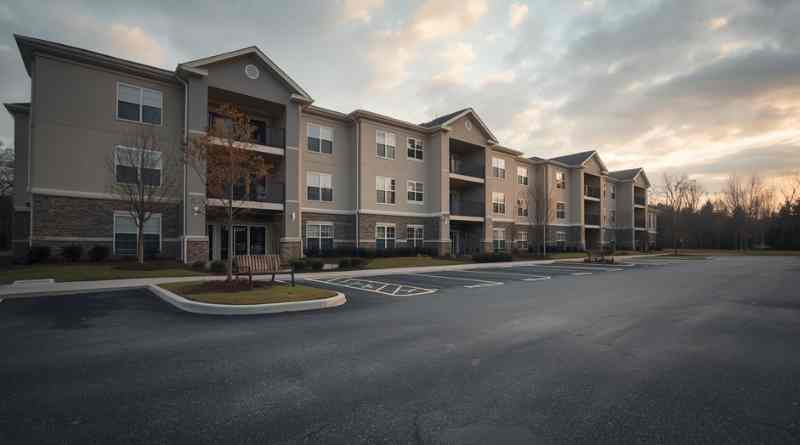
Hawthorne Residential Partners Lawsuit Facts & Rights
If you rent from Hawthorne Residential Partners and something in your apartment has been broken for months, you are not alone. Thousands of tenants across the Southeast have shared the same frustration, submitting maintenance requests, getting no response, and feeling stuck in a lease with no easy way out.
The Hawthorne Residential Partners lawsuit is not just one case. It is a growing collection of legal actions filed in multiple states, each pointing to similar patterns: ignored repairs, improper fees, and alleged violations of federal housing law. If you live in a Hawthorne property or have in the past, understanding what these cases mean could directly affect your rights and your options.
Who Is Hawthorne Residential Partners?
Hawthorne Residential Partners is a property management company headquartered in Greensboro, North Carolina. The company manages approximately 324 apartment communities across the Southeast United States, with over 60,000 residential units under its control.
That scale matters. When a single property manager controls that many units, any flaw in the system does not just hurt one family. It can affect tens of thousands of renters at the same time. A broken maintenance tracking system, undertrained staff, or a fee structure that violates consumer protection laws does not stay isolated to one building. It spreads across the entire portfolio.
Hawthorne primarily operates across states including North Carolina, Florida, Georgia, South Carolina, Virginia, and Texas. The company markets its properties as professionally managed, modern apartment communities. But the lawsuits filed against it tell a more complicated story.
Unlike a small landlord who manages a few units, large corporate property managers like Hawthorne operate with layers of management, centralized systems, and standardized policies. When those policies cause harm, they tend to cause the same harm repeatedly, which is exactly what class-action lawsuits are designed to address.
A Timeline of the Hawthorne Residential Partners Lawsuits
The legal trouble for Hawthorne did not begin overnight. Multiple cases have been filed across different states over the past two years, each with different claims but overlapping themes.
2023 — Keosha Johnson v. Hawthorne Residential Partners (North Carolina)
This is the most significant case so far. Filed as a class action in North Carolina, the lawsuit alleged that Hawthorne automatically charged tenants three separate fees the moment eviction proceedings were initiated. The complaint argued this practice violated North Carolina’s consumer protection laws.
The case reached a settlement, which is legally significant. A settlement does not mean an admission of guilt, but it does suggest the company found it more practical to resolve the matter than to defend the practice in court. Class-action settlements typically include some form of compensation for affected tenants along with requirements for the company to change how it operates going forward.
October 2024 — Noronha v. Hawthorne Residential Partners (Florida)
Filed in Florida, this case brought additional claims related to tenant treatment and management practices. Florida has relatively strong tenant protections on paper, which makes allegations of this kind particularly serious under state law.
October 2024 — Watts v. Rivarel LLC (South Carolina)
This case involved a tenant who suffered an injury due to broken stairs on the property. The lawsuit argued that management knew about the dangerous condition and failed to fix it within a reasonable time. This falls under premises liability law, which holds property managers responsible for injuries caused by conditions they knew about or should have known about.
January 2025 — Jehramyus v. Hawthorne Residential Partners (Georgia)
This is one of the more serious cases from a federal law perspective. The tenant alleged that Hawthorne refused to provide disability accommodations as required by the Fair Housing Act. Under federal law, landlords must make reasonable adjustments to rules or policies when a tenant with a disability needs them. Refusing to do so can trigger federal liability.
Beyond the courtroom, the Better Business Bureau has recorded over 130 complaints against Hawthorne over a three-year period, with most involving maintenance failures and unresolved service issues. While BBB complaints are not legal findings, they paint a consistent picture of how tenants across multiple properties have experienced the company’s management.
State-by-State Tenant Rights: Repair Timelines and Legal Remedies
One of the most important things to understand is that tenant rights vary significantly depending on which state you live in. The same problem that gives you strong legal options in Florida might require different steps in North Carolina. The table below gives a general overview of key states where Hawthorne operates.
| State | Emergency Repair Deadline | Standard Repair Deadline | Repair and Deduct Allowed | Claim Filing Window |
|---|---|---|---|---|
| North Carolina | 24 to 48 hours | Reasonable time, varies by situation | No | 3 years (contract claims) |
| Florida | 7 days after written notice | 20 days after written notice | Yes, with conditions | 4 years |
| Georgia | Reasonable time | Around 30 days | Limited | 4 years |
| South Carolina | Reasonable time | 14 to 30 days | Limited | 3 years |
| Virginia | 14 days (emergency) | 30 days | Yes | 5 years |
| Texas | 7 days (after notice) | Reasonable time | Yes, with conditions | 4 years |
These are general guidelines based on state law. Local ordinances may provide additional protections. Deadlines and remedies can vary based on the type of repair, the terms of your lease, and your specific circumstances. Always consult a local tenant rights attorney before taking legal action.
The core idea across every state is the same: landlords must maintain habitable conditions, and tenants have the right to take action when they do not.
What Legal Claims Are Being Made — and What They Actually Mean
Reading about lawsuits can feel confusing if you are not a lawyer. Here is what each legal theory in the Hawthorne cases actually means in everyday terms.
Breach of the Implied Warranty of Habitability
Every state in the country recognizes that when you rent an apartment, your landlord has a basic legal obligation to keep it safe and livable. This is called the implied warranty of habitability, and it does not need to be written into your lease to apply. It exists automatically under the law.
What makes an apartment legally uninhabitable? Courts generally consider conditions like non-functioning heating or cooling systems, significant water damage or leaks, mold growth that creates a health risk, structural problems that make the unit unsafe, plumbing that does not work, serious pest infestations, and broken locks that compromise security.
When a property manager repeatedly marks maintenance requests as “completed” without anyone actually showing up to fix the problem, that is a potential breach of this warranty. It does not matter that the system logged an action. What matters is whether the actual condition of the apartment met the legal standard.
Fair Housing Act Violations
The Fair Housing Act is a federal law that prohibits discrimination in housing. One of its most important provisions requires landlords to make reasonable accommodations for tenants with disabilities. This means adjusting rules, policies, or practices when a tenant’s disability requires it.
A common example is allowing a service animal in a building with a no-pets policy. Another is modifying how rent payments are received if a disability makes standard methods difficult. What the Jehramyus case in Georgia alleges is that Hawthorne simply refused to engage with these requests, which under federal law is not a neutral act. It is a violation.
Fair Housing Act cases carry serious consequences. Courts can award monetary damages, require the company to change its policies, and mandate staff training across the entire organization.
Premises Liability
This legal theory applies when someone is physically injured because of a dangerous condition on a property that management knew about and failed to fix. The Watts case in South Carolina is an example, broken stairs that management had been notified about allegedly caused a tenant injury.
The key legal test is whether management knew or should have known about the problem, and whether they took reasonable action within a reasonable time. If a tenant reported the broken stairs in writing and nothing was done for weeks, that paper trail becomes powerful legal evidence.
Unlawful Fees and Consumer Protection Violations
The North Carolina class-action case centers on an allegation that Hawthorne automatically stacked three fees onto tenant accounts when eviction proceedings began. Consumer protection laws in most states prohibit deceptive or unfair fee practices, and courts take seriously any attempt to extract money from tenants during an already vulnerable situation.
What makes a fee improper? Generally, fees that are not clearly disclosed in the lease, fees that are charged without a legitimate basis, or fees that appear designed to burden tenants rather than reflect actual costs can be challenged under state consumer protection statutes.
Wrongful Withholding of Security Deposits
This is one of the most common complaints tenants have with property managers of all sizes. When a tenant moves out, the landlord typically has a limited time window, usually 14 to 30 days depending on the state, to return the security deposit or provide an itemized written statement of any deductions.
Withholding a deposit without proper justification, failing to return it on time, or inventing damage charges not supported by evidence can expose a landlord to penalties that far exceed the original deposit amount.
What Hawthorne Tenants Have Been Reporting
Beyond the courtrooms, a consistent pattern emerges from tenant complaints. It is worth understanding because it shows the lawsuits are not isolated incidents, they reflect a broader experience.
The most common issue is the maintenance black hole. Tenants submit requests through the official online portal, watch the status change to “completed,” and then never see anyone actually show up. When they follow up, they are told the work has been done. In some documented cases, tenants submitted the same repair request more than ten times for the same unresolved problem. Mold is a recurring issue in several of these complaints.
A second pattern involves billing and debt collection. Tenants who paid their final utility bills have later received calls from third-party debt collectors demanding payment for the same bill. When tenants exercised their legal right to request written verification of the debt, which every debtor is entitled to under federal law, the collectors reportedly refused to provide it without payment first. That is itself a potential violation of the Fair Housing Debt Collection Act.
A third pattern involves early lease termination. In one documented case, a tenant paid over three thousand dollars to exit her lease early because management repeatedly failed to address sanitation problems in common areas. Despite documented walkthroughs with staff, nothing improved. For her, the cost of leaving was lower than the cost of staying.
These stories matter because courts look at patterns. When many tenants report the same experience across different properties in different states, it strengthens the argument that the problem is systemic rather than accidental.
Your Step-by-Step Guide If You Are a Hawthorne Tenant With a Complaint
Knowing your rights is only useful if you know what to do with them. Here is a practical sequence to follow if you are dealing with a habitability or management issue at a Hawthorne property.
Step 1 — Document everything immediately. Take photos and videos of every problem with date and time stamps enabled on your phone. Keep screenshots of every maintenance request you submit, including the date submitted and any status updates the system shows.
Step 2 — Send written notice. Most states require you to formally notify your landlord in writing before you can take legal action. Your notice should clearly describe the problem, reference your lease terms, and give the landlord a specific and reasonable timeframe to fix it. Send this by email and, if possible, by certified mail so you have proof of delivery.
Step 3 — Create a paper trail at every step. Follow up every phone call or in-person conversation with a brief email summarizing what was discussed. Never rely on verbal promises in a housing dispute. If management told you someone would come on Tuesday, send an email that says “Following up on our conversation — I understand a maintenance worker will visit on Tuesday to address the mold issue in the bathroom.”
Step 4 — Know your state’s specific repair deadline. Refer to the table above to understand how much time your landlord legally has to respond. Emergency repairs generally require much faster action than standard maintenance issues.
Step 5 — Explore your legal remedies. Depending on your state, your options may include withholding rent until repairs are made, paying for the repair yourself and deducting it from rent, or terminating your lease through constructive eviction. Each of these comes with specific legal requirements, do not attempt them without understanding the rules for your state.
Step 6 — File formal complaints. You can file a complaint with the U.S. Department of Housing and Urban Development for Fair Housing Act violations. For general habitability issues, your state attorney general’s office and local housing authority are good starting points. The Better Business Bureau complaint process, while not a legal remedy, creates a public record.
Step 7 — Consult a tenant rights attorney. Many tenant rights attorneys offer free initial consultations. Legal aid organizations provide free or low-cost representation to tenants who qualify based on income. A lawyer can tell you exactly which claims apply to your situation and whether joining a class-action lawsuit might be an option.
One concept worth understanding before you act is constructive eviction. If your apartment becomes so uninhabitable that living there is genuinely not reasonable, not just uncomfortable, but legally uninhabitable, you may have the right to break your lease without owing further rent. But this requires following very specific legal steps. Simply moving out and stopping payment without proper notice could leave you owing months of rent. Get legal advice before taking this route.
What Compensation Can Tenants Recover?
When tenants win cases involving habitability failures or Fair Housing violations, the financial outcomes can cover a wide range of losses.
Courts can award a refund of rent paid during months when the apartment was legally uninhabitable. They can order the return of wrongfully withheld security deposits, often with additional penalties on top. If you paid out of pocket for repairs that management refused to make, those costs may be recoverable. If poor conditions caused a health problem, respiratory issues from mold, for example, your medical expenses may be compensable. If you had to break your lease and pay early termination fees because management made the unit unlivable, those relocation costs may also be included.
In Fair Housing Act cases, the remedies go beyond money. Courts can require the company to revamp its accommodation request system, mandate staff training, impose maximum response times for emergency repairs, and appoint an independent monitor to verify compliance. These structural changes can benefit every current and future tenant in the company’s portfolio.
Class-action settlements usually mean smaller individual payouts compared to what a single plaintiff might receive. However, the policy changes that accompany them often have a broader impact than any single check.
In cases where a landlord’s conduct was particularly egregious, knowingly leaving dangerous conditions unaddressed for extended periods, for example, courts in some states may also award punitive damages. These are designed to punish the behavior and deter similar conduct in the future.
Why This Case Signals a Larger Shift in Rental Housing Law
The Hawthorne Residential Partners lawsuit is part of a broader pattern happening across the country. Over 44 million households in the United States rent their homes, and an increasing share of those rentals are controlled by large institutional investors and corporate property management firms.
When a single company manages 60,000 units, the stakes of its internal policies are enormous. One poorly designed fee structure, one undertrained regional manager, one flawed maintenance tracking system, each of these problems does not affect 10 families. It can affect thousands.
State legislatures have started to respond. Several states have passed or are currently debating legislation that strengthens habitability enforcement, establishes mandatory repair response timelines, and creates faster out-of-court complaint processes for tenants. North Carolina, where the Hawthorne class-action settlement occurred, has had ongoing discussions about tenant protection reform.
The Hawthorne cases are also contributing to a growing body of legal precedent on corporate landlord accountability. When courts approve class-action settlements that include mandatory policy changes, they are essentially setting a compliance standard that other large property managers are watching.
What happens with Hawthorne over the next few years will likely shape how attorneys, regulators, and legislators approach the entire corporate landlord sector.
Frequently Asked Questions
Has Hawthorne Residential Partners settled any of the lawsuits against it?
Yes. The 2023 class-action case filed in North Carolina, Keosha Johnson v. Hawthorne Residential Partners, reached a settlement. The lawsuit alleged that the company automatically charged tenants three separate fees when eviction proceedings began, which may have violated state consumer protection law. While a settlement does not constitute a legal admission of guilt, it does indicate the company chose to resolve the matter rather than defend the practice in court. The settlement is believed to have included compensation for affected tenants as well as requirements for the company to change relevant fee practices.
How do I officially report Hawthorne Residential Partners for habitability or discrimination issues?
You have several options depending on the nature of the complaint. For Fair Housing Act violations, including disability accommodation refusals, you can file a complaint directly with the U.S. Department of Housing and Urban Development (HUD) at hud.gov or by calling their Fair Housing hotline. For general habitability and maintenance failures, your state’s attorney general office and local housing authority are the appropriate places to start. You can also file a complaint with the Better Business Bureau to create a documented public record, and your state may have a specific tenant protection or consumer protection agency as well.
Can I legally break my lease if my Hawthorne apartment is uninhabitable?
Possibly, but you must follow the correct legal process. The legal concept involved is called constructive eviction. It applies when conditions in your apartment become so bad that continuing to live there is not reasonably possible. However, you cannot simply move out and stop paying rent. You typically need to send formal written notice describing the conditions, give the landlord a reasonable time to fix them, and then vacate if the problem is not resolved. If you skip any of these steps, you could still be held liable for the remaining rent. Because the rules vary by state and the threshold is fairly high, it is strongly recommended that you consult a tenant rights attorney before attempting this route.
What counts as an illegal or improper fee under housing law?
Fees become legally questionable when they are not clearly disclosed in your lease agreement, when they are charged without a valid basis, or when they appear designed to extract money rather than cover a genuine cost. The North Carolina lawsuit against Hawthorne alleged that tenants were automatically charged three separate fees simply because eviction proceedings were started, regardless of whether those fees were warranted. Many states require landlords to disclose all possible fees upfront in the lease. If you are charged a fee that was not in your original lease and no addendum was signed, that may be worth challenging. A tenant rights attorney or your state attorney general’s consumer protection office can help evaluate whether a specific fee crosses the legal line.
How long does a landlord legally have to fix a maintenance problem?
It depends on your state and the severity of the issue. Emergency repairs, things like no heat in winter, a gas leak, or a serious roof collapse, generally require a response within 24 to 72 hours in most states. Non-emergency but still significant repairs like broken appliances or plumbing issues typically have a window of 7 to 30 days depending on the state. Florida, for example, gives landlords 7 days after written notice for emergency repairs and 20 days for standard issues. North Carolina operates on a more flexible “reasonable time” standard. The key point across all states is that the clock does not start until you have delivered written notice of the problem. Verbal complaints typically do not trigger the legal deadline.
If I join a class-action lawsuit against Hawthorne, what should I expect?
Joining a class-action means you become part of a larger group of plaintiffs with similar claims. You will typically not need to appear in court yourself, the lead plaintiff and attorneys handle most of the legal process on behalf of the entire class. If the case settles or the class wins, you will receive a portion of the total recovery, which is often a smaller individual amount than you might receive in a solo case. However, class actions also tend to produce company-wide policy changes that benefit all tenants, not just those who sued. If you believe your experience with Hawthorne fits a pattern described in existing lawsuits, you should contact a tenant rights attorney who handles class-action housing cases. They can assess whether your situation qualifies and whether joining an existing case or filing a new one makes more sense.
Legal Disclaimer: This article is written for general informational purposes only. It does not constitute legal advice and should not be treated as such. Laws governing tenant rights vary significantly by state and by individual circumstance. If you are dealing with a specific housing dispute, please consult a licensed attorney in your state.