
Ridgeline Heights Colorado Lawsuit Full Story
Most people assume that when you buy a home, you own it. Every inch. Every corner. Every tree in the backyard. But the Ridgeline Heights Colorado lawsuit proved that assumption can be dangerously wrong, and that a quiet little creek can become the center of a legal nightmare that costs you years of your life.
This case grabbed national attention, not just because of the legal complexity, but because it could happen to any homeowner. If you live near a trail, a stream, or open land in Colorado, or anywhere in the country, this story is worth understanding from start to finish.
What Is Ridgeline Heights and Why Does Its Location Matter
Ridgeline Heights sits in the foothills west of Denver, in Jefferson County, Colorado. The broader area includes communities like Kittredge, Evergreen, and Genesee, all known for their natural beauty, outdoor lifestyle, and properties that back up against creeks, trails, and forested land.
It is the kind of place people dream of living. Properties here often come with elevated price tags, and a big part of that value comes from natural features like water access, mountain views, and proximity to open space.
But that same outdoor culture creates a unique legal tension. When trails, creeks, and open parcels have been used freely by locals for decades, the line between public space and private property can blur, sometimes legally. That is exactly what happened here.
The Ridgeline Heights Colorado Lawsuit: How It All Began
A Dream Home With a Hidden History
In January 2021, Taralyn Romero and her fiancé purchased a five-bedroom home in Kittredge, Colorado, just outside the Ridgeline Heights area. The property was listed at $800,000, and the couple paid $840,000, $40,000 above asking price.
The creek running through the backyard was a major selling point. It was highlighted in the listing. It was part of why they fell in love with the property. And from every angle, the inspection, the paperwork, the formal evaluation, everything appeared clean and straightforward.
What the listing did not mention, and what the sellers did not disclose, was a 35-plus-year history of community use.
What Nobody Told the New Owners
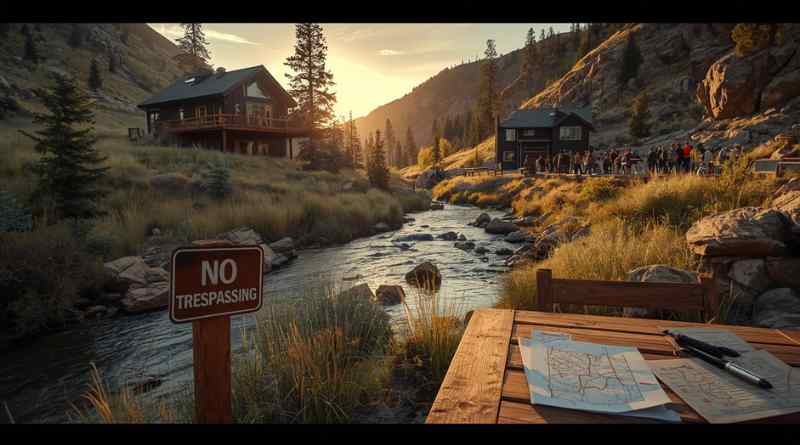
For over three decades, local residents had treated the creek on that property as if it were part of the nearby Kittredge Park. People fished there, let their dogs run along the banks, set up lawn chairs, and gathered on warm weekends. The previous owners had never restricted this access. They had never posted signs. They had simply tolerated it , or embraced it.
When Romero and her fiancé moved in, they had no idea this history existed. They fenced the property. They put up “No Trespassing” signs. They expected that, as new owners, they had the right to use their own backyard privately.
The community did not see it that way.
The Situation Turns Hostile
What followed was not a quiet neighborhood disagreement. Romero described gathering sizes of more than 50 people at a time on her property, fishing, socializing, and treating her fenced backyard as a public park.
When she attempted to enforce her property rights, things escalated quickly. She faced verbal abuse from strangers. Her property was vandalized. She fought constant battles with people who felt genuinely entitled to access the land they had used for decades.
She reached out to local government for help. The county declined to intervene on her behalf.
Then, in 2022, the situation took an even more shocking turn. The county did not just refuse to help her, Jefferson County filed a lawsuit against her.
Understanding the Legal Claims: Adverse Possession and Prescriptive Easement
This is where most articles lose people. The legal terms get dropped in without explanation, and readers are left confused about what actually happened. So let us break it down clearly.
What the County Argued
Jefferson County’s lawsuit rested on two legal doctrines: adverse possession and prescriptive easement. Both are based on the same core idea, that long-term, open, and continuous use of land can eventually create legal rights to that land, even without the original owner’s permission.
The table below explains these terms in plain English and how they applied directly to Romero’s situation.
| Legal Term | Plain English Meaning | How It Applied in This Case |
|---|---|---|
| Adverse Possession | When someone uses another person’s land openly and continuously for a required number of years, they may be able to legally claim ownership of it | The county argued that decades of public use of the creek area qualified as a basis for ownership transfer |
| Prescriptive Easement | A legal right to use someone’s property on a regular basis, without owning it, based on long-term open use that the owner did not prevent | Public access for 35-plus years, with no prior restriction by previous owners, supported this claim |
| Non-Disclosure | A seller’s legal obligation to inform buyers of known material issues with a property | The previous owners never told Romero about the community’s long history of using the creek |
| Settlement Agreement | A legal resolution agreed to by both parties, avoiding a full court trial and its associated costs and risks | Romero and Jefferson County reached one in May 2023 |
| Public Land Conversion | When a portion of private property is legally reclassified as publicly accessible through purchase or legal ruling | The county ultimately purchased 0.099 acres of the creek area from Romero as part of the settlement |
In Colorado, prescriptive easement claims require the use to have been open, notorious, continuous, and without the landowner’s permission for at least 18 years. The fact that this community had been using the creek for more than 35 years, with no objection from previous owners, gave the county a credible legal argument.
This is not a loophole. It is an established legal doctrine designed to reflect the reality of how land gets used over time. But for a new buyer who had no idea this history existed, it felt like being punished for someone else’s silence.
The Dakota Flint Colorado Ridgeline Heights Connection: A Pattern Worth Knowing
The Romero case was not the only high-profile property dispute in this region. The broader area around Ridgeline Heights, Colorado, has seen multiple cases involving property rights, government land claims, and the collision between private ownership and longstanding public use.
Dakota Flint, Colorado, and the Ridgeline Heights corridor more broadly have become reference points in conversations about Colorado property law precisely because of how frequently these disputes arise in communities built around natural features. When trails, creeks, and open land define a neighborhood’s character, the legal boundaries between private and public space become contested territory.
Understanding the Dakota Flint Colorado Ridgeline Heights cases as a group, not just as isolated incidents, helps reveal the larger pattern: buyers in these communities are often unaware of easement histories, prior use agreements, and the legal exposure that comes with owning land near well-used natural features.
How the Lawsuit Resolved: The 2023 Settlement
Romero took a path that most homeowners in her position do not have access to: she went public.
She started a TikTok account under the handle @wickedwitch_ofthe_west and began documenting her experience. The videos resonated with hundreds of thousands of people who watched a homeowner being sued for protecting her own yard. She gained more than 240,000 followers, and the public attention created pressure that purely legal avenues had not.
In May 2023, Romero and Jefferson County reached a settlement agreement. Here is what it included.
She sold 0.099 acres of the creek area to the county for $250,000. A fence and rope markers were installed to clearly separate the portion sold to the county from the portion remaining in her private ownership. She retained approximately 70 percent of her original property and the majority of the creek itself.
It was not a perfect outcome for either side. But it was a resolution.
Romero later filed a separate civil action against the previous owners for failing to disclose the community use history. That case was resolved privately, with terms kept confidential.
Speaking about the experience publicly, she described the whole ordeal as something that fundamentally broke her sense of the American dream. Buying a home is supposed to be the safe, stable thing to do. This case showed how fast that assumption can unravel.
Similar Colorado Property Disputes That Followed a Similar Pattern
The Ridgeline Heights case was the most publicly visible, but it was not alone. Colorado has seen several high-profile property rights disputes in recent years, and each one reinforces the same warning.
The Genesee Case (2022 to 2025)
In a case that ran parallel to Romero’s, an 81-year-old woman in Genesee, Colorado, found herself in a legal battle with the Colorado Department of Transportation. CDOT sought to use 17 acres of her land for a transportation corridor project.
Unlike the Romero case, this one went all the way to trial. The jury sided with the property owner. She was awarded $3 million in compensation.
The contrast between the two cases is instructive. In Romero’s case, she was sued by a county government and settled without going to trial. In the Genesee case, the property owner went to trial against a state agency and won. Both cases involved the government claiming rights over private land. Both owners fought back. The outcomes differed, but the message was the same: private property rights in Colorado are worth defending.
The Brighton Farm Case
The Brighton Farm case involved agricultural land in the eastern Colorado plains, where eminent domain pressure from development interests and road expansion projects created a dispute over fair compensation and land use rights.
Like the Genesee case, it highlighted that the conflict between private ownership and public or governmental claims is not limited to scenic foothill creeks. It happens on farmland, in suburbs, and along infrastructure corridors across the state.
What Colorado Homebuyers and Current Owners Need to Know
If there is one practical reason to understand the Ridgeline Heights Colorado lawsuit, it is this: the same thing can happen to you, and knowing what to look for in advance could save you years of legal and personal hardship.
Before purchasing any property near a creek, trail, open space, or park in Colorado, request a full title search and property survey. Ask the seller directly whether the public has historically used any portion of the land. Ask whether any informal easements or access arrangements exist, written or otherwise.
Check county easement records. Jefferson County and most Colorado counties maintain public records on registered easements, and a real estate attorney can help you interpret them.
If you already own property and discover unauthorized use, document everything from the moment you become aware of it. Record dates, take photographs, note the frequency and nature of the access. Prompt documentation can make a significant legal difference if a dispute escalates.
Colorado law requires sellers to disclose known material defects in a property. Community access history that could give rise to an easement or adverse possession claim almost certainly qualifies. If you discover after purchase that this information was withheld, you may have grounds for a claim against the seller, as Romero herself demonstrated.
Finally, if you receive notice of a government claim, easement dispute, or lawsuit related to your land, consult a Colorado property attorney before responding. These cases move fast, and the legal doctrines involved are nuanced.
Frequently Asked Questions
What is the Ridgeline Heights Colorado lawsuit actually about?
The Ridgeline Heights Colorado lawsuit refers primarily to the legal dispute involving Taralyn Romero and Jefferson County following her 2021 purchase of a home near Kittredge, Colorado. After moving in, she discovered that local residents had used the creek on her property for over 35 years. When she tried to restrict access, the county filed a lawsuit in 2022 claiming adverse possession and prescriptive easement rights. The case settled in May 2023 after Romero gained widespread public support through social media.
What does adverse possession mean for homeowners in Colorado?
Adverse possession is a legal doctrine that allows someone who has used another person’s land openly, continuously, and without permission for a defined period to eventually claim legal ownership of it. In Colorado, the required period is 18 years. It is designed to reflect long-term realities of land use, but it can catch new buyers off guard when prior owners allowed access that the new owner was never told about. The best protection is a thorough title search and legal review before purchasing.
Did Taralyn Romero win the Ridgeline Heights case?
The outcome was a settlement, not a courtroom victory. Romero agreed to sell 0.099 acres of the creek area to Jefferson County for $250,000. In return, the county installed clear boundary markers separating public and private land, and Romero kept approximately 70 percent of her property. She also retained most of the creek. While she did not get everything she wanted, she preserved the majority of her land and received financial compensation. She later settled a separate claim against the prior owners for non-disclosure.
Can the public legally access a creek running through private property in Colorado?
This is a genuinely complex legal question with no single simple answer. Colorado generally does not grant automatic public access to creeks on private land just because the water is public. However, if public use has been open, continuous, and unchallenged for 18 or more years, a court may recognize a prescriptive easement granting that right of access. The outcome depends heavily on the specific history of use, whether previous owners actively allowed or encouraged it, and whether proper legal steps were followed. Anyone dealing with this situation should consult a Colorado property attorney.
What is the connection between Dakota Flint, Colorado, and Ridgeline Heights?
Dakota Flint, Colorado, and the Ridgeline Heights area are part of the broader Jefferson County foothills corridor where property rights disputes involving natural features have become increasingly visible. The Dakota Flint Colorado Ridgeline Heights cases, when viewed together, reflect a regional pattern of homeowners and buyers being caught off guard by longstanding community use of land that is technically private. The area’s outdoor culture and proximity to parks and water features creates recurring legal ambiguity that makes due diligence before any property purchase especially important.
What should I do before buying a home near a creek or trail in Colorado?
Start with a full title search through a licensed Colorado title company and commission an independent property survey. Ask your real estate agent and the seller directly about any historical public use of the land. Review Jefferson County or relevant county easement records, which are public documents. Hire a Colorado real estate attorney to review the purchase agreement and any known use history. If the property is near a park, trail system, or natural waterway, treat that as a reason for extra scrutiny, not just extra appeal. The Romero case is a reminder that natural features add value on paper and risk in practice if the legal history has not been properly examined.
Final Thoughts
The Ridgeline Heights Colorado lawsuit is more than an interesting legal story. It is a warning about the gap between what a property listing shows you and what the land’s history actually contains.
Taralyn Romero did everything a buyer is supposed to do. She made a significant financial commitment. She researched the property through official channels. She hired professionals. And she still ended up in a multi-year legal battle because a 35-year history of community use was never disclosed.
Colorado property law is not forgiving when it comes to these situations. The doctrines of adverse possession and prescriptive easement exist for legitimate reasons, but they put a heavy burden on new owners who inherited decisions they never made.
The single most powerful protection you have is knowing the right questions to ask before you sign anything. In communities near creeks, trails, and open land, that kind of due diligence is not optional. It is essential.