Janice Griffith Lawsuit: The Case & Legal Lessons
Picture this: a rooftop, a swimming pool, a camera crew, and a social media celebrity looking for his next viral moment. What should have been a flashy publicity stunt ended with a broken foot, a lawsuit, and a legal debate that still echoes through the entertainment industry today.
The Janice Griffith lawsuit is not just another celebrity dispute. It is a real case that raised serious questions about negligence, consent, and who is responsible when someone gets hurt while creating content. Whether you are a model, an influencer, or just someone curious about how the law handles these situations, this case has something important to teach.
Who Is Janice Griffith?
Janice Griffith is an American model and adult film actress who built a significant presence in the entertainment industry in her early twenties. She has been featured in major publications and worked with several well-known brands and productions within the adult entertainment space.
At the time of the incident in 2014, she was a relatively young performer with a growing public profile. She was not just a background figure in this story. She was the person whose safety was directly at stake, and her decision to take legal action made this case one of the most talked-about liability disputes in influencer and entertainment history.
What Happened on the Day of the Incident
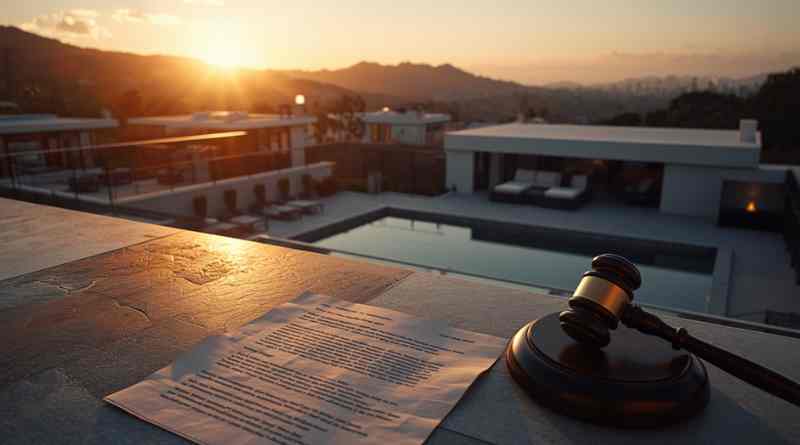
In April 2014, a photo shoot was organized at Dan Bilzerian’s mansion in the Hollywood Hills area of Los Angeles. The shoot was sponsored by Hustler Magazine, one of the most well-known names in adult entertainment publishing.
Dan Bilzerian, a social media personality famous for his over-the-top lifestyle content, was a central figure in the shoot. As part of the publicity stunt, Bilzerian threw Griffith off the rooftop of his mansion toward the swimming pool below.
She did not land safely in the water. Instead, she hit the edge of the pool and broke her foot.
The incident was captured on video and quickly spread across social media. What was meant to be an eye-catching content moment became a documented injury. That video, as you will see later, played a critical role in the legal case that followed.
The Role of Hustler Magazine
Hustler Magazine organized and sponsored the photo shoot. This detail matters legally because it means the publication had a direct hand in planning the event, not just Bilzerian acting on his own.
When Griffith filed her lawsuit, Hustler was named alongside Bilzerian as a defendant. The argument was straightforward: if you plan and fund a shoot where someone gets hurt, you share in the responsibility for what goes wrong.
Breaking Down the Janice Griffith Lawsuit
After the injury, Griffith pursued legal action. She filed her case in California state court, which is important because California has well-established laws around personal injury, negligence, and entertainment industry liability.
Her claim centered on negligence and unsafe working conditions. She argued that the people responsible for organizing the stunt failed to take reasonable precautions to keep her safe during a physically risky activity.
The damages she sought were approximately $85,000. In personal injury law, this kind of figure typically covers medical bills, lost income during recovery, and compensation for pain and suffering. For a foot injury that affects a performer’s ability to work, these costs add up quickly.
How the Defendants Responded
Dan Bilzerian’s legal team did not take the claim quietly. His lawyer publicly called the lawsuit frivolous, suggesting that Griffith had agreed to the stunt and knew exactly what she was getting into.
The core defense argument was built around two ideas: voluntary consent and assumption of risk. The defendants argued that Griffith had willingly participated in the stunt, understood there was a physical element involved, and therefore could not hold them responsible for the outcome.
This defense is common in cases involving physical activity, sports, or entertainment stunts. But as you will see below, it does not always hold up in court.
The Key Legal Arguments Explained Simply
This case introduced several important legal concepts to a wide public audience. Understanding them helps you grasp not just this lawsuit but how the law works in similar situations.
Negligence and Duty of Care
Negligence is at the heart of most personal injury cases. The idea is simple: if you put someone in a situation where they could get hurt, you have a responsibility to take reasonable steps to protect them.
In legal terms, this is called a duty of care. Griffith’s legal team argued that Bilzerian and Hustler owed her a duty of care as the organizers of the stunt and that they failed to meet it.
One of the most notable gaps in this case was the apparent absence of a professional stunt coordinator. In Hollywood productions, even minor physical stunts involve trained safety professionals. There was no indication that any such precautions were taken on that rooftop. That absence is significant because courts look at industry standards when deciding whether someone acted reasonably.
Assumption of Risk: Does Saying Yes Protect the Other Side?
Assumption of risk is a legal defense that says: if you knowingly and voluntarily agree to take part in something risky, you cannot later hold others responsible when things go wrong.
On the surface, it seemed to apply here. Griffith agreed to be at the shoot. She agreed to the stunt. But here is where it gets more nuanced.
There is a difference between accepting that something involves risk and accepting that the people organizing it will be careless about your safety. Courts in California make this distinction. If the defendant acted with gross negligence, meaning they showed extreme disregard for the other person’s wellbeing, the assumption of risk defense can fall apart.
The question the court had to consider was not just whether Griffith said yes. It was whether she consented to being thrown in a way that was unsafe, with no professional oversight, and no proper landing setup.
Vicarious Liability: Was Hustler Responsible for Bilzerian’s Actions?
Vicarious liability is the legal principle that one party can be held responsible for the actions of another, usually when there is a directing relationship involved.
In this case, if Bilzerian was acting under Hustler’s instruction or on their behalf during the shoot, then Hustler could be liable for what he did. This is why naming the publication as a defendant made legal sense. It was not just about who physically threw Griffith. It was about who organized, directed, and funded the environment where it happened.
Key Legal Concepts at a Glance
| Legal Concept | Plain-Language Meaning | Application in This Case |
|---|---|---|
| Duty of Care | Obligation to avoid causing harm to others | Organizers had a duty to make the stunt safe |
| Negligence | Failing to meet that duty | No safety coordinator, no controlled landing zone |
| Assumption of Risk | Knowing acceptance of danger | Griffith agreed to the stunt but not to unsafe conditions |
| Vicarious Liability | One party responsible for another’s actions | Hustler potentially liable for Bilzerian’s conduct |
| Gross Negligence | Extreme disregard for another’s safety | Could override the assumption of risk defense entirely |
| Informed Consent | Agreeing with full knowledge of all specific risks | Was Griffith told exactly what the risks were? |
A Clear Timeline of the Case
Understanding the sequence of events helps you follow the legal story without confusion.
| Date | What Happened |
|---|---|
| April 2014 | Photo shoot held at Bilzerian’s Hollywood Hills mansion |
| April 2014 | Griffith thrown from rooftop, strikes pool edge, breaks her foot |
| Mid-2014 | Video circulates widely on social media |
| Late 2014 | Griffith demands approximately $85,000 in damages |
| 2015 | Bilzerian’s lawyer publicly dismisses the claim as frivolous |
| 2015 to 2016 | Lawsuit filed in California state court |
| Undisclosed date | Case reportedly settled out of court |
Most reports indicate this case ended in an out-of-court settlement, which is extremely common in high-profile personal injury cases. Settlements allow both sides to avoid the uncertainty of a trial, reduce legal costs, and keep the specific terms private. It also means the case never produced a formal court ruling, which is why the final judgment details remain undisclosed.
How This Case Compares to Similar Entertainment Lawsuits
The Janice Griffith case did not exist in a vacuum. The entertainment industry has a long history of on-set injuries that led to legal action.
In many film and television productions, strict safety protocols exist precisely because accidents happen. Union rules, industry standards, and insurance requirements all push professional productions toward caution. The problem is that influencer-driven content and social media shoots often operate outside those established systems.
Bilzerian’s mansion was not a regulated film set. There was no production company following SAG-AFTRA safety guidelines. That lack of structure is exactly what makes this kind of case different from a traditional Hollywood accident.
Courts today are increasingly treating social media content creation as a commercial production activity. If you are generating content for sponsorships, brand deals, or paid promotions, the law looks at it through a professional lens, even if it feels casual from the outside.
What This Means for Influencers, Models, and Content Creators Today
The world of content creation has exploded since 2014. Millions of people now participate in sponsored shoots, brand collaborations, and viral content campaigns. The legal environment has grown alongside that industry.
Here is what this case teaches, stated plainly:
A signed waiver is not a blank check. Consent forms and liability waivers offer some protection to organizers, but they do not erase responsibility if someone acted with gross negligence or created conditions that went far beyond what was disclosed.
Video evidence works both ways. In this case, the footage of the incident was used by both the plaintiff and the defense. If you are involved in a content shoot that results in injury, documentation can either support your case or complicate it, depending on what it shows.
The absence of a safety professional is a red flag. In any stunt, physical challenge, or high-risk content scenario, the lack of trained safety oversight is not just irresponsible. It is the kind of detail that can define a negligence case in court.
Verbal agreement is not sufficient. Everything should be in writing. What risks are involved, what safety measures are in place, what happens if something goes wrong. Informal arrangements leave everyone exposed.
Rights and Responsibilities: A Quick Reference
| Party | Rights | Responsibilities |
|---|---|---|
| Performer or Model | Safe working conditions, right to refuse unsafe tasks, fair compensation | Read all contracts carefully, ask about safety measures, report concerns before the shoot |
| Producer or Host | Creative direction, protection from frivolous claims through valid consent | Provide safety measures, hire qualified coordinators, carry liability insurance |
| Brand or Sponsor | Promotional content as agreed | Ensure the production environment meets safety and legal standards |
Why This Case Still Matters
The Janice Griffith lawsuit happened over a decade ago, but its relevance has not faded. If anything, it has become more important as the creator economy has grown into a multi-billion dollar industry.
Content creators today often work without the safety nets that traditional entertainment professionals take for granted. No union representation, no standardized contracts, no mandatory insurance. That gap between creative ambition and legal protection is exactly where cases like this one are born.
Courts are not going to treat a rooftop stunt differently just because it was filmed for Instagram instead of a Hollywood production. The duty of care exists regardless of the platform.
For anyone working in this space, the message is clear. Creativity does not cancel out accountability. The more audiences your content reaches, and the more money involved in producing it, the more the law will hold everyone responsible to a professional standard.
Frequently Asked Questions About the Janice Griffith Lawsuit
What was the Janice Griffith lawsuit actually about?
The lawsuit arose after Janice Griffith broke her foot during a Hustler-sponsored photo shoot at Dan Bilzerian’s Hollywood Hills mansion in April 2014. Bilzerian threw her off a rooftop into a pool as part of a publicity stunt, but she struck the edge of the pool instead of landing safely in the water. Griffith filed a personal injury lawsuit alleging that the organizers were negligent and failed to provide safe conditions for the stunt.
Who were the defendants in the case?
Griffith named two defendants: social media personality Dan Bilzerian and the parent company of Hustler Magazine, which organized and sponsored the photo shoot. Naming both was significant because it raised the question of vicarious liability, meaning whether Hustler could be held responsible for Bilzerian’s actions since he was participating in their production.
How much money did Janice Griffith seek in damages?
Griffith reportedly sought approximately $85,000 in damages. This figure is consistent with a personal injury claim covering medical expenses related to the foot injury, lost income during her recovery period, and compensation for pain and suffering. For a performer whose work depends on physical ability, even a temporary injury can translate into meaningful financial loss.
Did Janice Griffith win the lawsuit?
The case did not produce a public court ruling. Most reports indicate it was settled out of court, which means both sides reached a private agreement without going to trial. The specific terms of any settlement were not disclosed publicly. Out-of-court settlements are extremely common in personal injury cases, especially high-profile ones where both parties want to avoid prolonged media coverage.
What is assumption of risk and why was it central to this case?
Assumption of risk is a legal defense that argues the injured party knowingly agreed to participate in a dangerous activity and therefore cannot hold others liable for resulting injuries. The defense used this argument because Griffith had voluntarily agreed to take part in the stunt. However, assumption of risk has limits. If a defendant acted with gross negligence or created dangers beyond what the participant could reasonably have anticipated, the defense may not protect them. The key issue in this case was whether Griffith consented to the stunt or to unsafe conditions.
What should content creators and models take away from this case?
The most important lesson is that informal content shoots are not exempt from professional legal standards. If a stunt, physical challenge, or high-risk activity is involved, the organizers have a legal duty to provide a safe environment regardless of how casual the production feels. Models and performers should always review contracts carefully, ask specifically about safety precautions before agreeing to any physical activity, and understand that a signed waiver does not necessarily protect the other party from a negligence claim if something goes seriously wrong.
Conclusion
The Janice Griffith lawsuit started as a viral moment and ended as a genuine legal lesson. What happened on that rooftop was not just an accident. It was the result of a physical stunt performed without adequate safety precautions, in an environment where no one seemed to have asked the most basic question: what happens if this goes wrong?
For models and performers, the takeaway is straightforward. Your safety matters more than any content, any paycheck, or any publicity opportunity. Know your rights, read your contracts, and never feel pressured into a situation that does not feel safe.
For producers, brands, and influencers organizing shoots, the message is equally clear. When you put someone in a physically risky situation, you are responsible for their wellbeing. Viral content does not exempt you from the law. A professional standard of care applies whether you are shooting on a Hollywood soundstage or a private rooftop in Los Angeles.
This case is more than a decade old, but the principles it raised are more relevant than ever. The creator economy is only getting bigger. And the legal expectations that come with it are growing alongside it.
Note: This article is written for informational purposes only and does not constitute legal advice. If you are dealing with a personal injury situation or a dispute related to an entertainment or content production, consult a qualified attorney in your jurisdiction.