Boka Toothpaste Lawsuit: Verified 2026 Status on NAD Ruling, Heavy Metals Testing, and Legal Investigation
The boka toothpaste lawsuit situation involves real and documented regulatory action but no confirmed filed class action lawsuit in any public court docket as of June 2026. Here is the verified picture: on May 1, 2025, the National Advertising Division ruled that Boka’s parent company, Essor Group, must discontinue claims that its toothpaste remineralizes and whitens teeth and must modify claims for its prebiotic mouthwash. The NARB appellate panel upheld that ruling in July 2025. Separately, independent testing published by Lead Safe Mama in 2025 found detectable levels of lead, arsenic, and mercury in certain Boka toothpaste products. Law firm CohenMalad, LLP updated its active investigation into Boka on April 29, 2026, and is actively reviewing consumer case submissions. No class has been certified, no settlement has been announced, and no claims process is open to consumers as of this writing.
What Is Boka Toothpaste and Who Makes It?
Boka is a direct-to-consumer oral care brand founded in 2018 and operating as a product line of Essor Group. The brand built its market position as a fluoride-free alternative oral care company, centering its product line around nano-hydroxyapatite, commonly abbreviated as n-HA, as its primary active ingredient for cavity prevention and enamel care.
Nano-hydroxyapatite is a synthetic form of the mineral that makes up approximately 97 percent of tooth enamel and 70 percent of bone. The scientific premise behind using n-HA in toothpaste is that applying it to tooth surfaces may support enamel remineralization by filling microscopic gaps and providing the raw mineral material that enamel is made of. This is a distinct mechanism from fluoride, which works primarily by converting hydroxyapatite into the more acid-resistant fluorapatite compound.
Boka’s marketing positioned n-HA as a scientifically validated alternative to fluoride, claiming the toothpaste could remineralize teeth, prevent cavities, and whiten teeth. The brand is sold direct-to-consumer online, through subscription auto-delivery programs, and through retailers including Target and Amazon. Celebrity and influencer endorsements have been part of Boka’s marketing strategy.
This marketing approach, specifically the comparative efficacy claims versus fluoride and the strength of the remineralization and whitening claims, attracted regulatory scrutiny that produced the 2025 NAD and NARB decisions at the center of the boka toothpaste lawsuit discussion.
The NAD Decision: May 1, 2025
The most concrete and verifiable regulatory action in the boka toothpaste lawsuit landscape is the National Advertising Division decision issued on May 1, 2025.
The National Advertising Division, known as the NAD, is a self-regulatory program administered by BBB National Programs that evaluates advertising claims for truthfulness and accuracy. The NAD process is triggered when a competitor or other interested party challenges a company’s advertising claims. In this case, the challenge to Boka’s claims was brought by Procter and Gamble, maker of Crest toothpaste, making this a direct competitive challenge from the dominant fluoride-based toothpaste brand against one of the most prominent fluoride-free alternatives.
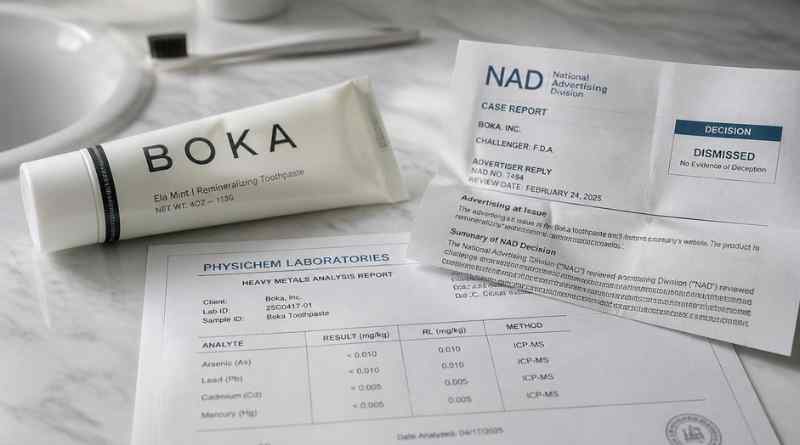
The NAD reviewed Boka’s claims that its n-HA toothpaste remineralizes teeth, whitens teeth, and that its prebiotic mouthwash provides specific oral health benefits. The NAD accepted basic claims that the products contain nano-hydroxyapatite. However, the panel found that Boka’s evidence did not substantiate the stronger efficacy claims about remineralization and whitening. Specifically, the NAD found that the evidence Boka submitted was based on ingredient-level research about n-HA in general rather than product-specific testing on Boka’s formulations.
The NAD’s May 1, 2025 decision recommended that Essor Group discontinue the remineralization and whitening claims for Boka toothpaste and modify the prebiotic mouthwash claims. NAD recommendations are not legally enforceable court orders, but companies that refuse to comply are referred to the Federal Trade Commission for potential enforcement action. Non-compliance with NAD decisions also becomes a matter of public record that strengthens any consumer deception claims in subsequent litigation.
The NARB Appellate Decision: July 2025
Essor Group appealed the NAD’s May 2025 decision to the National Advertising Review Board, commonly known as the NARB, which serves as the appellate body for NAD decisions.
In July 2025, the NARB appellate panel reviewed the case and largely upheld the NAD’s recommendations. The appellate panel echoed the NAD’s concerns that Essor’s evidence did not directly test Boka’s specific products and emphasized that the claims about remineralization, whitening, and related efficacy required product-specific clinical substantiation rather than general ingredient-level research.
The NARB July 2025 ruling is a significant escalation of the regulatory pressure on Boka because it confirms that the NAD’s initial finding was not an error correctable on appeal. The decision signals to Boka that if the company continues to make similar marketing claims without obtaining product-specific clinical evidence, a referral to the FTC for enforcement action becomes more likely.
The combined NAD and NARB decisions have already produced practical changes in how companies marketing nano-hydroxyapatite toothpaste can advertise their products. The decision has been described by legal and advertising law experts as establishing a new standard that prioritizes rigorous product-specific testing over ingredient-level research for dental product claims.
Independent Heavy Metals Testing: The Lead Safe Mama Reports
Separate from the advertising claim challenge, a different category of concern about Boka products emerged in 2025 through independent consumer product testing.
Lead Safe Mama, a consumer safety testing and reporting organization focused on identifying toxic metals in everyday products, published reports in 2025 documenting the following findings from independent laboratory testing of Boka oral care products.
Boka Ela Mint toothpaste tested positive for lead, arsenic, and mercury. Boka Kids Orange Cream fluoride-free toothpaste tested positive for lead and mercury.
These findings, if accurate, represent a different and potentially more serious category of concern than the advertising claim issues addressed by the NAD. Heavy metals in toothpaste are particularly concerning because toothpaste is a product used daily, often by children, and while adults typically spit toothpaste out, some amount of ingestion occurs during regular use. Children swallow significantly more toothpaste than adults on average.
Boka has publicly responded to these reports by stating that the company takes quality and safety seriously, requires that its toothpaste meet FDA guidelines, and that raw materials are tested and verified to be within California Proposition 65 limits for heavy metals.
The California Proposition 65 limits are the relevant standard because they require businesses to provide warnings to Californians before knowingly exposing them to chemicals listed as known to cause cancer, birth defects, or other reproductive harm, including lead and arsenic. Boka’s position is that its products meet these standards. Critics note that Proposition 65 limits represent a regulatory compliance threshold rather than a guarantee of zero heavy metal content.
CohenMalad LLP confirmed in its April 29, 2026 investigation update that it is reviewing the Lead Safe Mama reports as part of its broader investigation into Boka’s marketing, product claims, and consumer representations. The law firm is accepting case inquiries from consumers who purchased Boka toothpaste, mouthwash, whitening kits, or other oral care products.
The CohenMalad LLP Investigation: Active as of April 2026
CohenMalad, LLP, a national class action law firm based in Indianapolis, Indiana, confirmed on April 29, 2026 that it is actively investigating claims related to Boka toothpaste, mouthwash, whitening kits, and other Boka oral care products.
The firm’s investigation encompasses both the advertising claim issues documented in the NAD and NARB proceedings and the heavy metals testing findings from Lead Safe Mama. The investigation is accepting case inquiries from anyone who purchased Boka oral care products.
An active law firm investigation is a meaningful legal development. It means attorneys with class action expertise are evaluating whether the documented facts meet the threshold for filing a formal class action complaint in federal court. Key factors they are evaluating include the legal theories available, the damages that consumers suffered, the strength of the evidence from the NAD ruling and the heavy metals testing, and whether a certified class can be defined with sufficient commonality to support class action treatment.
The investigation has not yet produced a filed complaint as of June 2026. However, the April 29, 2026 update date on CohenMalad’s investigation page indicates active ongoing work rather than a dormant inquiry.
The Legal Theories That Would Support a Boka Class Action
Understanding the boka toothpaste lawsuit requires understanding the legal theories that plaintiff attorneys would use to support a class action if one is filed.
False advertising under the Lanham Act or state consumer protection laws is the primary theory arising from the NAD and NARB decisions. The NAD’s finding that Boka’s evidence did not substantiate its remineralization and whitening claims provides a regulatory foundation for a consumer class action alleging that Boka consumers paid a premium for a product whose key efficacy claims were not scientifically supported. California’s Consumers Legal Remedies Act, the Unfair Competition Law under Business and Professions Code Section 17200, and similar consumer protection statutes in other states all prohibit false or misleading advertising and provide for consumer damages and restitution.
The economic injury theory in this type of case is that consumers paid a premium price for a product marketed as scientifically proven to remineralize and whiten teeth, when the NAD found the evidence insufficient to support those claims. The damages are the price premium paid for claimed benefits that regulators found were not substantiated.
Product liability arising from the heavy metals findings presents a separate and potentially more powerful legal theory. If independent testing documenting lead, arsenic, and mercury in Boka products is validated through additional testing, and if those levels exceed safe limits under applicable standards, a product liability class action alleging that Boka sold an unsafe product to consumers without adequate warning becomes viable. Product liability claims for contaminated consumer products have produced significant settlements in the oral care and personal care product space.
The combination of the advertising claim theory and the heavy metals theory in a single complaint against Boka would make for a multi-pronged case with both economic injury claims from consumers who paid premiums based on unsupported marketing and potential safety injury claims from consumers exposed to heavy metals through regular use.
What the NAD and NARB Decisions Mean for Boka’s Marketing Going Forward
The May 2025 NAD decision and the July 2025 NARB appellate ruling carry direct consequences for how Boka can market its products in the United States going forward.
The recommendation to discontinue remineralization and whitening claims means Boka cannot continue using those specific claims in advertising without obtaining the product-specific clinical evidence that NAD and NARB found was missing. Using discontinued claims after an NAD or NARB recommendation creates both regulatory exposure through potential FTC referral and legal exposure in any subsequent consumer class action, because the post-recommendation use of unsupported claims would demonstrate knowing conduct rather than an inadvertent marketing error.
The modification recommendation for prebiotic mouthwash claims requires Boka to ensure its mouthwash advertising accurately reflects what the evidence actually supports, rather than implying broader benefits than the scientific record justifies.
These changes affect how Boka competes in the rapidly growing fluoride-free oral care market, where the primary consumer appeal is the belief that n-HA provides scientifically backed benefits comparable to fluoride without fluoride’s associated concerns. If Boka can no longer claim remineralization and whitening without additional clinical evidence, the marketing proposition that differentiates the brand from conventional toothpaste is materially weakened.
Nano-Hydroxyapatite vs. Fluoride: What the Science Actually Shows
The boka toothpaste lawsuit cannot be fully understood without understanding the underlying scientific debate about nano-hydroxyapatite versus fluoride in cavity prevention and enamel care.
Fluoride is an FDA-approved active ingredient for cavity prevention with decades of clinical data supporting its efficacy across large population studies. It has regulatory approval for specific anti-cavity claims on toothpaste labels in the United States. The mechanism is established and the population-level evidence for its effectiveness is extensive.
Nano-hydroxyapatite has a growing body of supportive research, primarily from studies conducted in Japan where it has been used in oral care products since the 1980s and is approved as an active ingredient by Japanese regulatory authorities. Some comparative studies have shown n-HA performing similarly to fluoride in specific laboratory and small clinical contexts.
However, the NAD and NARB findings reflect the current regulatory status in the United States: the evidence base for n-HA as a cavity prevention active ingredient is not yet sufficient for FDA approval as an active ingredient, and the specific efficacy claims that companies like Boka were making about their products were not supported by product-specific clinical testing.
This distinction between ingredient-level research about n-HA in general and product-specific evidence about a particular toothpaste formulation is the scientific core of the NAD decision and would be the central scientific dispute in any class action litigation.
What Consumers Who Purchased Boka Products Should Do Right Now
Given the active investigation and the documented regulatory findings, there are several practical steps that Boka consumers can take right now.
Preserve purchase documentation. If you purchased Boka toothpaste, mouthwash, whitening kits, or other Boka oral care products, keep your receipts, order confirmation emails, subscription billing statements, and any screenshots of advertising claims that influenced your purchase. Documentation of what claims were being made when you bought the product is relevant to the advertising injury theory in any future class action.
Keep packaging and lot numbers if possible. For the heavy metals concern specifically, the specific product, formulation, and production lot are relevant to which testing results apply to the product you used. If you still have any Boka packaging with lot numbers, retain it.
Submit a case inquiry to CohenMalad LLP. The firm confirmed active investigation as recently as April 29, 2026 and is accepting inquiries from consumers who purchased Boka products. You can submit an inquiry through the firm’s website at cohenandmalad.com. This does not commit you to any legal action and creates no obligation. It places you in contact with the legal team evaluating whether a class action is viable and positions you to be notified if a complaint is filed.
File a complaint with the FTC if you believe Boka’s marketing misled you into purchasing the product. FTC complaints at ReportFraud.ftc.gov do not produce individual resolutions but contribute to the regulatory record that supports enforcement action.
Monitor the case for a formal filing announcement. If CohenMalad or another firm files a formal class action complaint against Boka, that filing will appear in public court records through the PACER federal court system. Legal news outlets including ClassAction.org will report the filing. Monitoring these sources is the most reliable way to know when a formal class action has been filed and when a claims process becomes available.
Do not act on any website claiming that a Boka toothpaste class action settlement with open claims and specific payout amounts is currently available. As of June 2026, no such settlement exists. No claims portal is verified. Any site providing class action payout estimates ranging from specific dollar figures and telling you to file before a specific deadline is providing unverified information that is not supported by any public court record.
Frequently Asked Questions
What is the boka toothpaste lawsuit about?
It involves two distinct legal concerns about Boka oral care products. First, the National Advertising Division ruled on May 1, 2025, that Boka must discontinue claims that its toothpaste remineralizes and whitens teeth and modify prebiotic mouthwash claims. Second, independent testing by Lead Safe Mama in 2025 found detectable levels of lead, arsenic, and mercury in certain Boka toothpaste products. Law firm CohenMalad LLP is actively investigating both issues as of April 2026.
Has a Boka class action been filed in court?
No confirmed class action complaint against Boka appears in public federal or state court dockets as of June 2026. CohenMalad LLP has an active investigation and is reviewing consumer inquiries, but no formal complaint has been filed and confirmed.
What did the NAD find about Boka’s marketing claims?
On May 1, 2025, the NAD recommended that Essor Group discontinue claims that Boka toothpaste remineralizes and whitens teeth and modify prebiotic mouthwash claims, finding that the evidence submitted was based on ingredient-level research rather than product-specific testing. The NARB appellate panel upheld this recommendation in July 2025.
What heavy metals were found in Boka toothpaste?
Lead Safe Mama published independent laboratory testing reports in 2025 finding lead, arsenic, and mercury in Boka Ela Mint toothpaste and lead and mercury in Boka Kids Orange Cream toothpaste. Boka stated its products meet FDA guidelines and California Proposition 65 limits for heavy metals.
Is Boka toothpaste safe to use?
As of June 2026, no confirmed court ruling has declared Boka toothpaste unsafe, and the FDA has not issued a safety warning or recall for Boka products. The NAD findings concern marketing claim substantiation, not product safety. The heavy metals testing findings are the subject of ongoing investigation. Consumers with specific safety concerns should consult their dentist or physician.
Can I file a claim against Boka right now?
No verified claims process exists for a Boka consumer class action as of June 2026. You can submit a case inquiry to CohenMalad LLP at cohenandmalad.com for inclusion in their ongoing investigation. If a class action is filed and settled, a formal claims process will be announced through official court channels.
Final Word
The boka toothpaste lawsuit situation in 2026 is one of documented regulatory findings, confirmed independent testing concerns, and active legal investigation, but no certified class action and no open claims process. The NAD and NARB decisions are real, published, and have direct consequences for how Boka can market its products. The Lead Safe Mama heavy metals findings are real, documented, and under active review by class action attorneys. The CohenMalad investigation is real and active as of April 2026.
What is not real is any website claiming a certified class action with specific payout amounts and filing deadlines exists right now. That information is fabricated. The legitimate path forward for consumers is to preserve documentation, submit inquiries to CohenMalad, file FTC complaints, and monitor official court channels for a formal complaint filing announcement.
Note: This article is for informational purposes only and does not constitute legal or medical advice. Consult a licensed attorney for legal guidance and a licensed dental professional for oral health guidance specific to your situation.